Beyond Information: Why Human Learning Still Matters in the Age of AI
Technology can deliver answers. People still help one another build judgment.
When a high school student uses artificial intelligence to solve a physics problem, the answer may arrive in seconds. The system can explain the formula, define the variables, and even generate another example. For many families, this feels like a breakthrough. A child who once waited for office hours or a tutor can now receive instant help.
But the same student may still not understand why the problem matters. He may not know how engineers use similar principles to design vehicles, how doctors rely on models to interpret data, or how scientists test whether an answer is reliable. He may have information without context. He may have an answer without judgment.
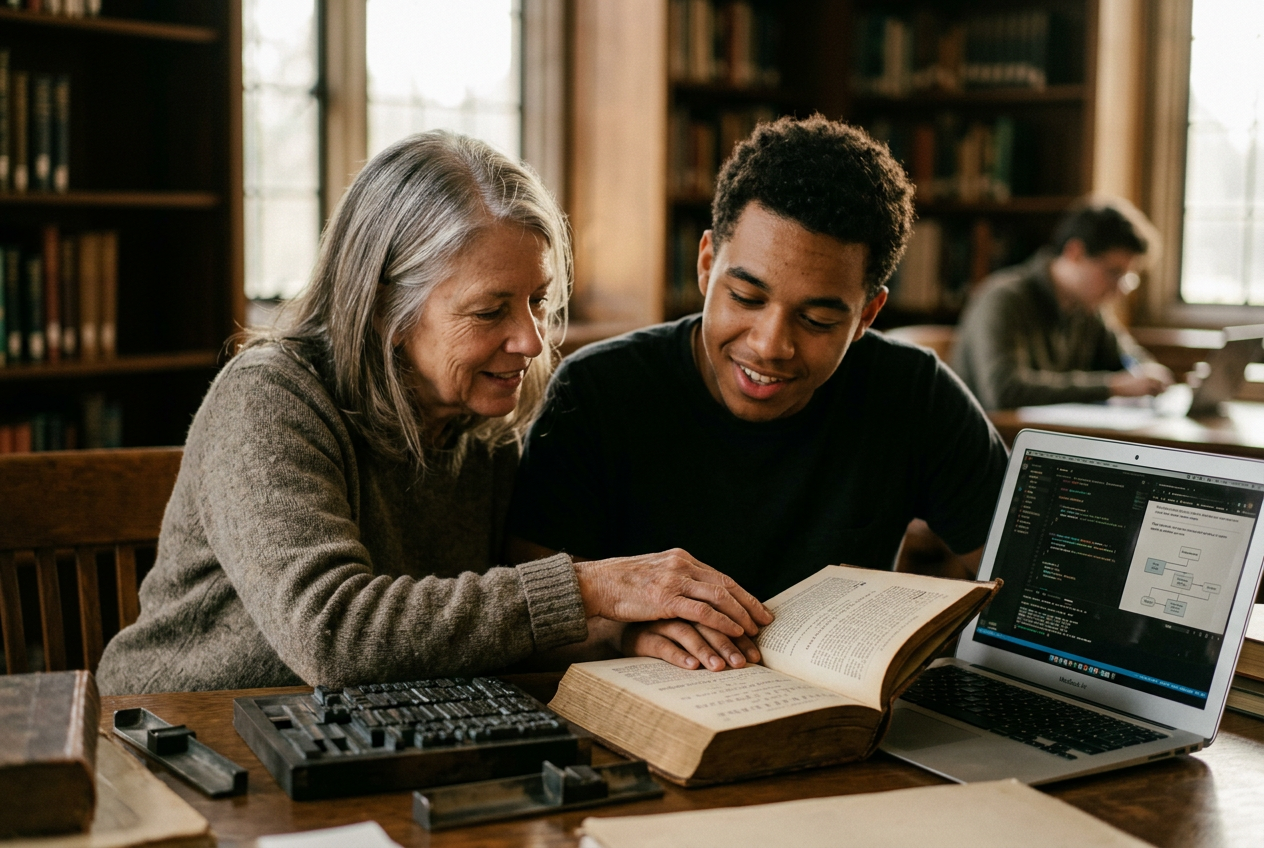
This is not a new problem. Around 1450, Johannes Gutenberg’s printing press changed the economics of knowledge. Books that once required long periods of hand copying could be reproduced more widely. Religious, scientific, and political ideas moved across cities and countries with new speed. Knowledge became less dependent on wealth, geography, and institutional gatekeepers.
Each major technology that expands access to knowledge creates a familiar anxiety. When books became easier to reproduce, people wondered whether teachers would matter less. When the internet entered ordinary households, people asked whether schools and libraries would lose their role. Today, artificial intelligence has revived the question in a new form: if answers are available instantly, what do human beings still need to learn?
History suggests that access to information does not reduce the need for education. It changes what education must do. The printing press did not eliminate schools; it helped expand them. The internet did not eliminate teachers; it changed how students gather information. Artificial intelligence will not eliminate learning; it will raise the value of judgment, context, ethics, communication, and the ability to ask better questions.
The central problem is that information and understanding are not the same. A student can read a definition without knowing when it matters. A worker can watch a tutorial without understanding how to apply it under pressure. A young person can search for career advice while still having no meaningful picture of what different professions actually require. Technology can deliver content. It cannot, by itself, provide maturity.

North American education and workforce policy increasingly reflects this reality. Public agencies speak about adult education, workforce readiness, career pathways, reskilling, and lifelong learning because the economy no longer allows learning to end with a diploma. Workers change industries. Parents return to employment after caregiving. Immigrants rebuild credentials. Older adults seek flexible participation. Students prepare for careers that are being reshaped by automation.
The artificial intelligence era makes this more urgent. AI can explain a concept, draft a document, summarize research, or generate practice questions. But people still need to decide what is accurate, what is ethical, what is relevant, and what should be done next. Those decisions require human judgment. Judgment forms through feedback, responsibility, failure, mentorship, and experience.
Leonardo da Vinci offers an older example of this principle. He did not become a creator simply by collecting facts. He developed inside a workshop culture that combined observation, apprenticeship, tools, practice, and dialogue. He learned how to look carefully, how to connect fields, and how to translate curiosity into invention. His development reminds us that creativity often emerges when knowledge is attached to people and real problems.

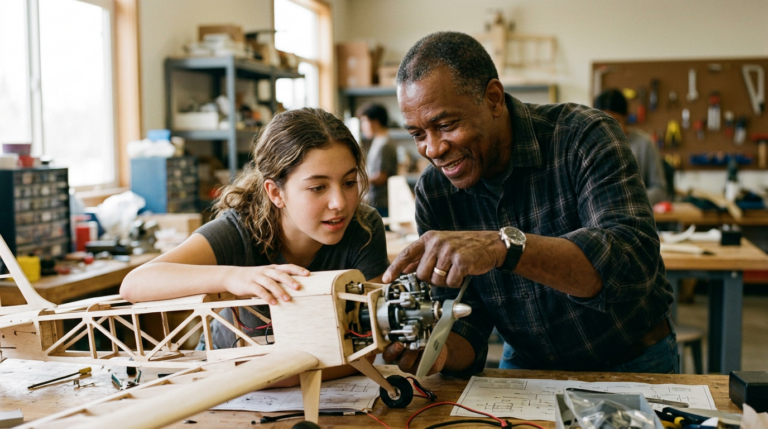
Modern students need the same kind of attachment, even if the setting looks different. A student learning mathematics may become more motivated after hearing an aerospace engineer explain how calculations become aircraft. A student interested in medicine may understand responsibility differently after speaking with a nurse or physician. A young adult considering entrepreneurship may learn more from one honest conversation about failure than from a dozen polished success stories.
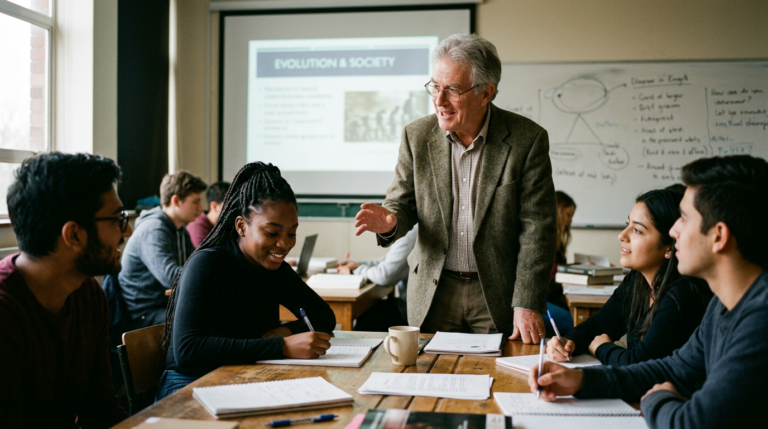
This is where older adults and experienced professionals have a central role. Many carry what can be called experience capital: accumulated judgment from years of practice. A retired teacher knows how students misunderstand ideas. A retired engineer recognizes patterns in failed systems. A retired nurse understands what care requires when a family is frightened and time is limited. A parent returning to work understands resilience, coordination, and adaptation. These capabilities may not always appear in a credential, but they are real.
The challenge is that society often organizes learning by age. Children go to school. Adults work. Retirees exit. That model no longer fits the economy or the lifespan. People live longer, work in more flexible patterns, change careers more often, and need to reskill throughout life. At the same time, young people need earlier contact with real-world experience.
The question is not whether technology will replace people in education. The better question is how technology can expand access while human connection deepens understanding. AI can help distribute knowledge. People still help one another turn knowledge into judgment, confidence, and purpose.
A society that understands this will not treat education as a pipeline that ends at graduation. It will treat learning as a civic system that links children, families, schools, workers, retirees, and communities. In that system, the most valuable resource is not simply information. It is the human capacity to interpret information, apply it responsibly, and pass wisdom forward.
This is only the beginning.