Reading Comprehension in BC: A Parent’s Guide for Grades 4–9
| Title | Reading Comprehension in BC: A Parent’s Guide for Grades 4–9 |
| Meta description | A 2026 Greater Vancouver guide to reading comprehension for Grades 4–9: what the BC curriculum expects and when a tutor helps. |
| Primary category | English & Writing (id 20) |
| Tags | for-parents, english-tutor, reading-comprehension, bc-curriculum, vancouver, burnaby, richmond, ages-7-12, ages-13-17 |
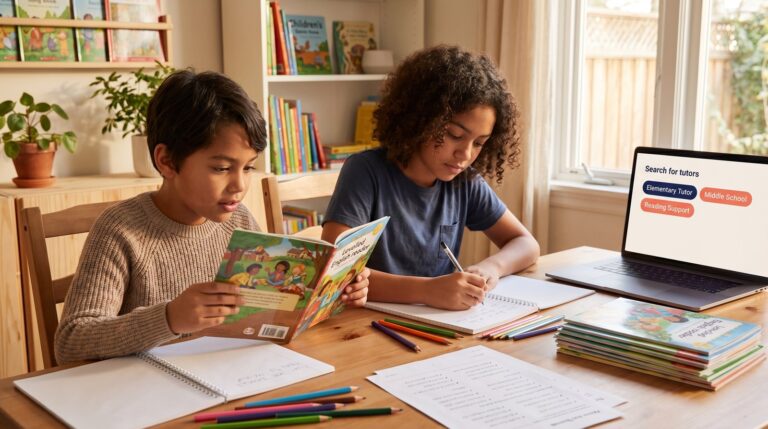
| Featured Image alt | A 10-year-old BC student reading a novel at home in Vancouver with a notebook open beside them |
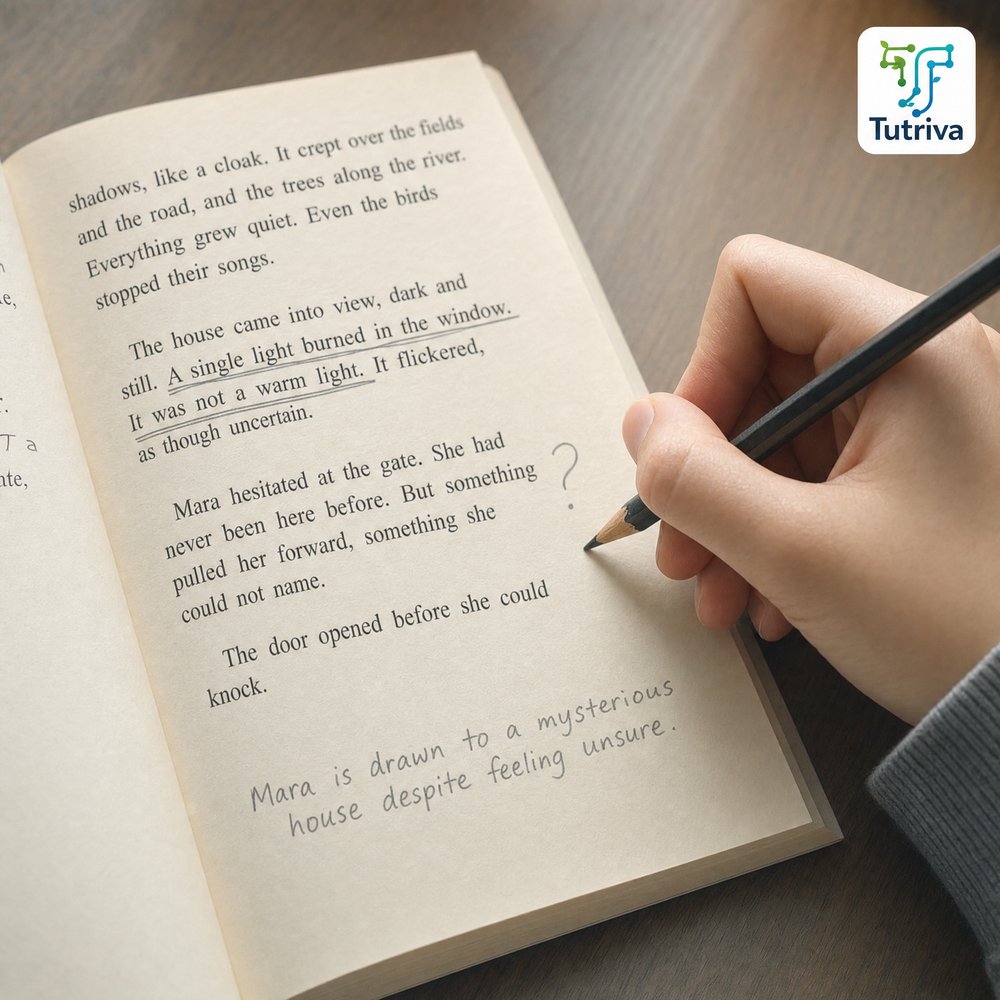
| Inline Image alt | A close-up of a student’s hand annotating a passage in a paperback book with pencil notes in the margin |
A Grade 5 student in Burnaby can read a 400-page fantasy novel cover to cover in a weekend. The same student is then handed a one-page social studies passage about Indigenous trade routes and visibly struggles to summarize the main idea. This is one of the most confusing patterns Greater Vancouver parents encounter: their child clearly reads, but the understanding is uneven.
This guide is for parents in Vancouver, Burnaby, Richmond, Surrey, Coquitlam, North Vancouver, West Vancouver, and White Rock whose children are somewhere between Grade 4 and Grade 9. We will lay out what reading comprehension actually involves, what the BC curriculum expects, when the difficulty curve tends to steepen, and how a tutor can help when home reading alone is not enough.
Reading comprehension is three layers, not one
When parents say their child has “reading problems,” they often mean different things. It helps to separate three layers:
1. Literal comprehension. Can the child accurately answer questions about what the text directly says? Names, dates, sequence of events, stated facts. By the end of the primary years (around Grade 3 to 4), most students can answer literal questions about age-appropriate texts.
2. Inferential comprehension. Can the child read between the lines? What is the character feeling? What does the author imply? What is likely to happen next? Many children stall here between Grade 4 and Grade 6.
3. Evaluative comprehension. Can the child judge the text? Is the argument convincing? Is the source reliable? What is the author’s perspective and bias? This is the layer high school depends on, and it takes the longest to build.
A child who reads fast can still be operating mainly at layer 1. The real challenge for Grades 4 through 9 is helping them grow into layers 2 and 3.
What the BC English Language Arts curriculum expects
BC’s English Language Arts (ELA) curriculum is organized around three components: Big Ideas, Curricular Competencies, and Content. The curricular competencies for ELA group under “Comprehend and connect” (reading, listening, viewing) and “Create and communicate” (writing, speaking, representing).
A practical translation by grade:
- Grades 4 and 5. Students are expected to read a widening range of texts (fiction, non-fiction, poetry, visual texts) and respond personally to what they read. Inferential thinking starts to be expected explicitly.
- Grades 6 and 7. Students start working with longer texts, identifying author’s purpose, and explaining how text features work. This is the grade range where parents most often notice a comprehension gap that was not visible earlier.
- Grades 8 and 9. Texts get longer, vocabulary denser, and arguments more complex. Students are expected to compare across texts and form supported opinions. By Grade 10, the BC Literacy 10 assessment formalizes much of this work.
The reading load also shifts. By Grade 6 and 7, students read substantial passages in science and social studies, and reading comprehension stops being only an English-class concern.
Why some strong-looking readers stall in Grade 4 to 6
Three patterns show up repeatedly in Greater Vancouver:
Pattern 1. Fluent but shallow. The child can decode and read at speed but has not internalized the habit of slowing down for hard sentences. A West Vancouver Grade 6 student who finishes a chapter in twenty minutes but cannot recall the main argument is a classic example.
Pattern 2. Strong fiction reader, weak non-fiction reader. Comfort with story does not automatically transfer to expository text. A child who loves novels may freeze on a science article because the structure is unfamiliar.
Pattern 3. The English-as-additional-language gap. A child who speaks English fluently at home and at school can still have a vocabulary gap with the academic English used in textbooks. (For families newer to BC, our ESL tutor roadmap for newcomer families covers this in more depth.)
These patterns often respond to consistent, targeted reading work over a few months, especially when noticed early.
What good reading comprehension practice looks like
Comprehension is built by reading widely, reading actively, and reading aloud at the right times. A useful weekly rhythm for a Grade 4 to 9 student:
- Daily independent reading, 20 to 30 minutes. Choice matters: the student should pick the book, within reason. Independent reading of self-chosen books has been linked to stronger vocabulary growth than assigned reading alone.
- Two or three shorter, more active reading sessions a week. A non-fiction article, a poem, or a short story handled with annotation: underlining unfamiliar words, marking confusing sentences, writing a one-line summary at the end.
- Frequent conversation about what was read. Not a quiz, but a real conversation. “What did you think of that ending? Did you believe the narrator? What was the article really about?”
- Reading aloud, sometimes. Even with older students, reading a paragraph out loud surfaces comprehension issues that silent reading hides.
A child who builds this rhythm by Grade 5 or 6 usually has stronger reading habits going into high school. Skipping it tends to mean working harder in later years on every text-heavy subject at once.
When a tutor genuinely helps
A tutor is worth bringing in when:
- The child reads fluently but consistently struggles to summarize, infer, or answer “why” questions about what they read.
- Report cards or teacher comments mention “needs to support ideas with evidence from the text” or “difficulty with inference.”
- The child is approaching the Literacy 10 or Literacy 12 assessments and is consistently below proficient on practice tasks.
- The family has tried reading together at home, and the conversations consistently end in frustration.
A tutor is usually not worth it when:
- The child is reading widely and happily on their own, and the only issue is that they prefer fantasy over history. Broadening genre comes from suggestion, not tutoring.
- The issue is decoding rather than comprehension. Younger or newer-to-English students with decoding gaps need a different kind of support, often a specialist in early literacy.
- The child is in a stressful season (a move, a school change, a family disruption). Reading recovers when life stabilizes.
How to find a reading and comprehension tutor in Greater Vancouver
Ask how they assess comprehension. A strong tutor will describe a specific diagnostic approach, often involving a short reading and a structured conversation, rather than handing the student a worksheet.
Ask about non-fiction. Many “English tutors” are most comfortable with literature. Reading comprehension trouble in Grades 6 to 9 often surfaces in non-fiction reading. The tutor should be comfortable working with science articles, news features, and social studies passages, not only novels.
Ask about vocabulary work. Strong comprehension and strong vocabulary are tightly linked. A tutor who builds vocabulary intentionally (word roots, context, deliberate exposure) helps comprehension more durably than one who only practises questions.
Online and in-person both work. A Surrey or Richmond family balancing after-school activities across the Lower Mainland may find online sessions easier to keep consistent through the school year. The same is true for a North Vancouver or White Rock family with long commutes.
Tutriva and reading comprehension support
Tutriva is a tutor–student platform serving Greater Vancouver: Vancouver, Burnaby, Richmond, Surrey, Coquitlam, North Vancouver, West Vancouver, and White Rock. Tutors set their own rates and keep what they earn; Tutriva does not take a commission on lessons. Parents browse tutors by subject and location, message directly, and book a free intro session before committing.
Many Tutriva tutors work in more than one language, which can help families whose home language is not English and who want a tutor able to bridge vocabulary across languages. Parents looking for a reading and comprehension tutor can post a short request, for example “Grade 6 student in Coquitlam, reads novels comfortably but struggles with non-fiction summaries and inference, looking for a once-a-week reading tutor”, and get matched with tutors whose style fits. (For families with younger newcomers whose first focus is academic English, see our ESL tutor roadmap for BC newcomer families and our Greater Vancouver STEM tutor guide for cross-subject reading support.)
Frequently asked questions
My child reads a lot but does not always understand. Should I be worried?
Not in a panic sense, but worth investigating. Strong silent reading without strong comprehension is a common pattern between Grades 4 and 6 and usually responds to active reading practice and conversation.
How important is reading aloud at home?
Useful at every age, particularly for surfacing comprehension issues that silent reading hides. Even two or three short read-aloud moments a week make a difference.
Should we focus on classic books or current books?
Both, with a strong bias toward what the child will actually read. Reading habit beats reading list. Classics and high-quality current books can both build vocabulary and inference.
Is online tutoring effective for reading comprehension?
Yes. Shared documents, collaborative annotation, and structured conversation translate well to online sessions, especially for kids who already use screens for school.
What about the BC Literacy 10 assessment?
Literacy 10 is a graduation requirement that asks students to read, view, comprehend, and respond to a variety of texts. Strong comprehension habits built in Grades 6 to 9 support stronger Literacy 10 performance and reduce the need for last-minute preparation.
The takeaway
Reading comprehension is not a single skill, and it is not only an English-class concern. It is the engine of every subject that depends on text, which by Grade 6 is most of them. Students who build the three layers steadily through Grades 4 to 9, literal then inferential then evaluative, arrive in high school better equipped to handle the texts they meet across subjects.
Looking for a reading comprehension tutor in Greater Vancouver? Browse English and reading tutors by city on Tutriva, or post a one-minute request describing your child’s grade and what they get stuck on.