How STEM Tutors in Greater Vancouver Help Kids Build Real-World Thinking (2026 BC Parent’s Guide)
| Title | How STEM Tutors in Greater Vancouver Help Kids Build Real-World Thinking (2026 BC Parent’s Guide) |
| Meta description | 2026 guide for Greater Vancouver parents: what a STEM tutor in Vancouver does, how it differs from a science tutor, and BC resources to support STEM at home. |
| Primary category | Science & STEM (id 15) |
| Tags | for-parents, stem, science, vancouver, burnaby, richmond, north-vancouver, ages-7-12, ages-13-17 |
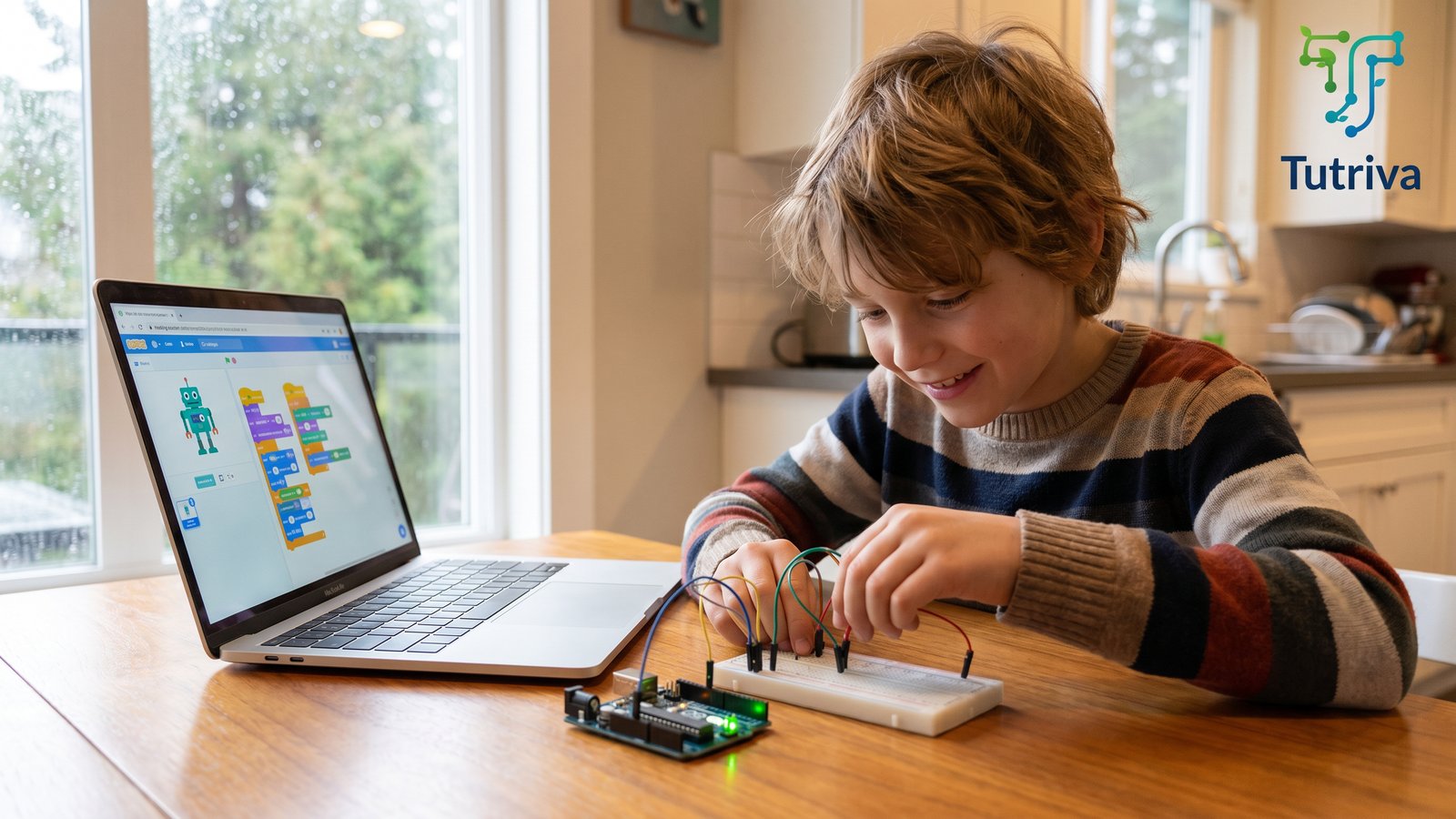
| Featured Image alt | A child building a circuit on a kitchen table in a Vancouver home, parent looking on with curiosity |
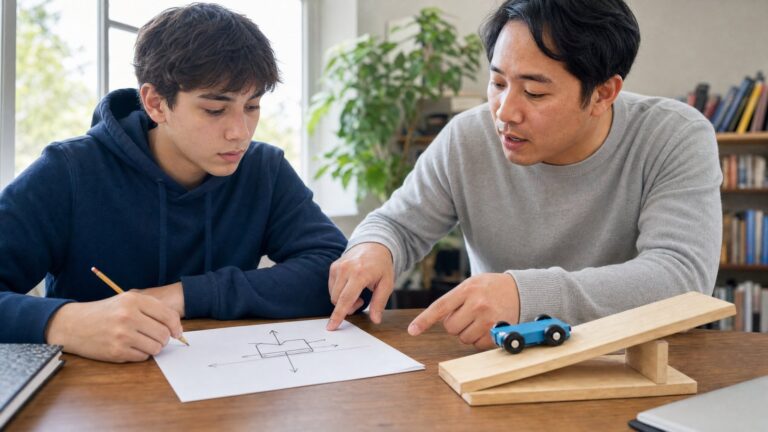
| Inline Image alt | A teenage Vancouver student writing code on a laptop next to a notebook of physics diagrams |
There is a difference between a kid who can pass a science test and a kid who notices a steaming kettle and asks why the lid lifts.
Both are valuable. But it’s the second kid that BC parents — in Vancouver, Burnaby, Richmond, and across Greater Vancouver — quietly hope their child becomes when they say they want their child to be “good at STEM.” Across Greater Vancouver, more parents are searching for a STEM tutor in Vancouver who can do more than help with homework. The science test will pass on its own once habits are in place. The kettle question is the foundation.
This guide is for parents who want to support STEM thinking at home without turning every dinner into a quiz. We’ll cover what a STEM tutor actually does, why classroom science alone often isn’t enough, the BC resources you can use for free, and how to find a STEM tutor in Greater Vancouver who fits your child’s stage.
What “STEM” actually means in a kid’s day

STEM stands for science, technology, engineering, and mathematics — but the acronym is less useful than the way the four disciplines blend in real problems. A kid using STEM thinking is doing one of these things:
- Asking a why question about something they observed.
- Designing a small test to answer it (even informally).
- Using a tool — a measuring cup, a thermometer, a piece of code, a stopwatch.
- Revising a guess when the result doesn’t match the prediction.
Notice none of these require a lab. They can happen at the breakfast table, in a backyard, or in the back seat of a car on the way to school.
Why classroom science alone often isn’t enough
BC’s K–12 science curriculum is strong on fundamentals, but classroom realities create natural limits: a teacher with twenty-five students simply cannot run twenty-five independent investigations per week. So lessons reasonably gravitate toward demonstrations and shared experiments, where every student arrives at the same conclusion at roughly the same time. That’s efficient. It is also different from how working scientists actually approach a problem.
The gap shows up in two places. First, kids who learn science as “things to memorize for the test” hit a wall around Grade 9 or 10, when courses start expecting them to apply concepts rather than recall them. Second, kids who could thrive at building projects, coding small games, or running real experiments rarely get the bandwidth in school to do it.
This is the gap a strong STEM tutor closes — not by repeating the lesson, but by adding the missing dimension. (For families also weighing structured contests, our academic competitions parent guide covers when contests actually fit.)
What a STEM tutor actually does (and doesn’t)
A general science tutor helps your child finish their textbook problem set. A STEM tutor does something different, and the distinction matters:
What a STEM tutor does:
- Picks a question the child is curious about and helps them turn it into a project.
- Teaches a tool — Python, an Arduino microcontroller (a small programmable circuit board), a CAD program, a microscope — alongside the topic.
- Connects what’s in the textbook to something the kid sees outside school (a bridge, a bird migration, an electrical socket).
- Coaches problem-solving habits: estimation, sanity checks, “does this answer make physical sense?”
What a STEM tutor doesn’t do:
- Replace classroom homework help. That’s a subject tutor’s job.
- Promise that your child will “become an engineer” — that’s a 10-year arc, not a tutoring outcome.
- Run a curriculum-by-the-week schedule. STEM tutoring is more like apprenticeship than test prep.
If your child has a specific test on Friday, a subject tutor is the right fit. If you want them to like science more in three months than they do today, a STEM tutor is the right fit.
BC-specific STEM resources you can use (most for free)
Greater Vancouver families are spoiled for STEM resources, and a good tutor will know them well enough to weave them into a child’s learning rhythm.
- Science World at 1455 Quebec Street in Vancouver (next to the Main Street–Science World SkyTrain station) — hands-on exhibits and live science demonstrations rotate throughout the year, suitable for a wide age range.
- UBC Geering Up — UBC’s engineering outreach program offers workshops, summer camps, and after-school programs for children from kindergarten through high school across the Lower Mainland.
- SFU Science AL!VE — Simon Fraser University’s K–12 science outreach program, offering summer camps and school workshops.
- Vancouver Aquarium in Stanley Park — life sciences and ocean ecology, with educational programs that align well with BC’s grade-level curriculum.
- TRIUMF Saturday Morning Lectures — TRIUMF, Canada’s particle accelerator centre at UBC, hosts free public lectures suitable for older students interested in physics.
- Pacific Museum of Earth at UBC — small, free, and excellent for geology-curious kids.
A good STEM tutor will treat these places not as field-trip destinations but as ongoing classrooms: a visit followed by a one-week project that builds on what was seen.
How to find a STEM tutor in Greater Vancouver
Finding a general science tutor is easy. Finding a STEM tutor — someone who can guide a project as well as explain a textbook — takes a sharper filter.
Ask about a recent student project. A STEM tutor who actually does project-based work will have stories ready. For example, “last fall, a Grade 8 student in Surrey built a wind-turbine model using a 3D-printed blade design, and we tracked output across blade angles.” A coach who can’t describe a recent project is mostly doing subject tutoring.
Ask about their own tools. Does the tutor code? Solder? Use a microscope? Run a hobbyist Arduino setup? Their personal toolkit is the toolkit your child will be exposed to.
Check the rhythm. STEM projects need 60–90 minute sessions, not 30. If a tutor only offers 30-minute slots, they’re set up for homework-help mode, not project mode.
Match the developmental stage. A Grade 4 STEM session looks like sustained curiosity play. A Grade 11 session looks like a structured experiment. The same tutor rarely does both well — ask for the tutor’s strongest age range.
Tutriva and STEM tutoring
Tutriva is a tutor-student platform serving Greater Vancouver — Vancouver, Burnaby, Richmond, Surrey, Coquitlam, North Vancouver, West Vancouver, and White Rock. Tutors set their own rates and keep what they earn. Parents browse tutors by subject and location, message directly, and book a free intro session before committing.
Parents looking for STEM support can post a specific request — for example, “Grade 7 student in Coquitlam, interested in coding and microcontrollers, weekends online OK” — and get matched with tutors whose backgrounds actually fit. The point is to skip the generic “science tutor” search and find someone who can guide a project, not just hand out answers.
Frequently asked questions
At what age should we start STEM support outside school?
There’s no fixed age. For curious kids, structured STEM exposure can start around Grade 3 or 4 with simple project-based play. Tool-based work (coding, electronics, CAD) typically lands well from Grade 6 onward.
Is STEM tutoring different from regular science tutoring?
Yes, in practice. A science tutor helps with the school curriculum. A STEM tutor helps build a way of thinking through projects, tools, and applied problem-solving. Some tutors do both — ask which mode they default to.
How much should a STEM tutor cost in Vancouver?
Rates vary widely depending on the tutor’s background and the project’s complexity. Browsing tutors by subject on Tutriva is the fastest way to compare options.
Does online STEM tutoring really work?
For most age groups and topics — yes. Coding and design work especially well online; younger kids doing hands-on building often need a parent nearby for in-person support. A good tutor will discuss this honestly.
The honest takeaway
A STEM tutor isn’t a shortcut to engineering school. It’s a way to give your child what classroom science usually can’t: time, tools, and a guide for the questions they’re actually curious about. The best outcomes happen when the child leads the curiosity and the tutor structures the learning around it.
Looking for a STEM tutor in Greater Vancouver? Browse tutors by subject and city on Tutriva, or post a one-minute request describing your child’s interests and let the right matches come to you.