From Math Olympiad to Reading Bee: A Parent’s Guide to Academic Competitions in Greater Vancouver (2026)
| Title | From Math Olympiad to Reading Bee: A Parent’s Guide to Academic Competitions in Greater Vancouver (2026) |
| Meta description | A 2026 guide to academic competitions in Greater Vancouver — what counts, signs your child is ready, and how to find a coach without overcommitting. |
| Primary category | Academic Competitions (id 19) |
| Tags | for-parents, academic-competitions, vancouver, burnaby, richmond, north-vancouver, ages-7-12, ages-13-17 |
| Featured Image alt | A parent and child reviewing math competition problems at a kitchen table in a Vancouver home, warm afternoon light |
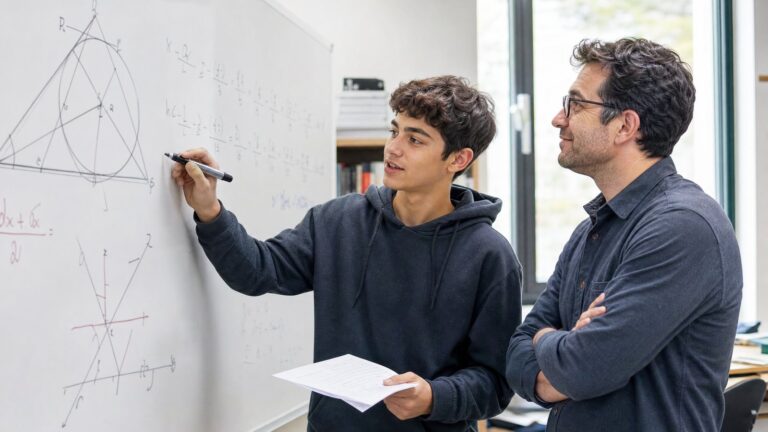
| Inline Image alt | A teenage Vancouver student writing a math contest at a desk, focused expression |
Should your kid be writing the AMC 10? Or Math Kangaroo? Or neither?
Every spring across Greater Vancouver — from Vancouver to Burnaby to Richmond — the same scene plays out: a teacher mentions an academic competition, a friend’s child wins a medal at a math contest, and parents start wondering whether their kid should be doing this.
Academic competitions can sharpen thinking, build confidence, and (yes) strengthen a university application. They can also drain weekends, generate anxiety, and turn a curious 10-year-old into a stressed 11-year-old. This guide is for BC parents trying to decide what’s worth pursuing — and what isn’t.
The three buckets of competitions BC families actually encounter

Most academic contests in our region fall into one of three categories.
Math contests. Math Kangaroo (with test centres in Metro Vancouver), the Waterloo math contests (Pascal, Cayley, Fermat, Euclid), the Canadian Open Mathematics Challenge (COMC), and the AMC series (8, 10, 12) are the most common. These are short sittings — typically 40 to 75 minutes, with AMC 8 on the shorter end and AMC 10/12 at 75 minutes — and run once or twice a year.
The Waterloo contests are widely recognized at Canadian universities, especially for students applying to math, engineering, and computer science programs. The AMC series is well known internationally and is often the first formal “math olympiad” pathway BC students encounter on their way toward harder contests.
Language and writing contests. Spelling bees and essay contests sit here. School-level spelling bees are common, and some BC school boards run their own writing or essay challenges. These contests reward children with strong vocabulary habits and reading stamina — not just memorizers.
Science and applied competitions. Science fairs (most notably the Greater Vancouver Regional Science Fair, a pathway to the Canada-Wide Science Fair), FIRST LEGO League and FIRST Robotics, the Canadian Chemistry / Physics / Biology Olympiads, and coding contests like the Canadian Computing Competition (CCC) all sit in this bucket. These tend to require sustained projects — weeks, sometimes months — rather than a single test sitting.
Signs your child is actually ready
Competitions reward the same trait good schoolwork rewards: comfort with a topic when nobody is watching. Before signing up, look honestly at these signals.
- Your child solves problems at school faster than the lesson moves, and is sometimes bored.
- They voluntarily revisit a tough question, days later, because it bothered them.
- They handle losing a board game, a chess match, or a quiz without falling apart.
- They ask “why?” more than “what’s the answer?”
If most of these are missing, the contest is likely to feel like punishment. That’s not a verdict on your child — it’s a verdict on the timing.
Signs you should wait a year
The flip side matters just as much. Wait if you see:
- Your child finds school stressful at the current level. Adding contests on top adds pressure to an already loaded plate.
- The contest interest is yours, not theirs. Coaches notice this quickly, and it’s the most common reason kids quit mid-prep.
- The family calendar can’t absorb a 90-minute weekly prep session. Competition prep that happens in a frantic rush hurts both the kid and the result.
What good preparation actually looks like
For elementary-age kids, “preparation” should look like enrichment: harder puzzles, longer reading, occasional past papers. Fifteen to thirty minutes a week is plenty for Math Kangaroo or a school-level spelling bee.
For Grade 7 and up, especially for the Waterloo contests, the math gets non-curricular fast. Students need exposure to combinatorics, number theory, and proof-style thinking — topics that most BC middle schools don’t cover. This is where a one-on-one coach starts to make a real difference, because past papers without a guide quickly become frustration.
For science and robotics, the rhythm is different. The work happens in build sessions, not in study sessions. Look for a coach or mentor who has actually worked on a team — not just one who knows the rules.
How to find an academic competition coach in Greater Vancouver
Coaching for academic contests is a niche, and good coaches are not interchangeable with general subject tutors. A strong AMC coach is not automatically a strong essay-contest coach. Here is a sensible filter:
Ask about the specific competition. A coach who has actually trained students for AMC 10 will talk about the contest’s structure — the trade-off between blanks and guesses on the scoring sheet, the timing pressure, the difference between AMC 10A and 10B (different test dates, separate problem sets, same target difficulty). Vague generalities about “math skills” are a yellow flag.
Ask for a past student’s progression. Not a name, not a contact — just a story: “what did this student look like a year ago, and where did they end up?” Good coaches enjoy telling these stories.
Match the rhythm to your life. Greater Vancouver families spread out from West Vancouver to White Rock; a coach who insists on a 45-minute commute every Saturday is a coach who will burn the family out by week six. Online sessions are not a downgrade for contest prep — most strong contest coaches in BC now run a mix of online and in-person.
Start with a single session. A trial lesson tells you more than any profile ever will. If the child comes out energized, you have a match. If they come out flat, keep looking — there’s no shortage of qualified coaches in the region.
Tutriva and academic competitions
Tutriva is a tutor-student platform serving Greater Vancouver — Vancouver, Burnaby, Richmond, Surrey, Coquitlam, North Vancouver, West Vancouver, and White Rock. Tutors set their own rates and keep what they earn; parents browse tutors by subject and location, message directly, and book a free intro session before committing.
Parents looking for an academic competition coach can post a one-line request — for example, “AMC 10 prep for a Grade 9 student in Burnaby, weekend evenings, online OK” — and receive offers from coaches who actually do this work. The point is to skip the scroll-through-100-profiles step and get to a real conversation with two or three coaches who match the request.
Frequently asked questions
At what age should my child start competition prep?
There’s no universal answer. Math Kangaroo runs from Grade 1 onward, but enthusiastic preparation usually makes sense from Grade 4 or 5, when sustained focus is realistic. For the AMC 10 and the Waterloo contests, the natural starting point is Grade 8–9.
Are competitions worth it for university applications?
For competitive STEM programs — yes, results can matter, especially the Euclid and the CCC. For most undergraduate programs, competitions are a “nice-to-have,” not a deciding factor. Don’t let admissions chasing drive the choice; let interest drive it.
Is online or in-person coaching better for contest prep?
For most contest types, the format matters less than the coach’s experience. A strong AMC coach over Zoom usually beats an average one in person.
How much should competition coaching cost in Vancouver?
Rates vary widely depending on the coach’s background and the contest’s difficulty. Browsing tutors in Greater Vancouver and reviewing a few profiles is the fastest way to get a current sense of the market.
The honest takeaway
Academic competitions aren’t for every child, and they aren’t required for a strong education. But for the kid who genuinely wants the challenge, the right coach makes the difference between a hobby that builds confidence and a stressful obligation. Take your time, trial widely, and let the child lead.
Looking for an academic competition coach in Greater Vancouver? Browse tutors by subject and city on Tutriva, or post a one-minute request and let the right matches come to you.