
Euclid Contest Prep for Grade 12 (BC): The Waterloo Admissions Edge
For Grade 12 students in British Columbia who are aiming at the University of Waterloo, one math contest sits at the centre of the conversation: the Euclid. Run by Waterloo’s Centre for Education in Mathematics and Computing (CEMC), the Euclid is the contest Waterloo’s Faculty of Mathematics and Faculty of Engineering weigh most heavily. A strong score can move a Grade 12 applicant from “competitive” to “stands out,” and it feeds directly into how Waterloo reads an application and considers entrance scholarships. This guide explains what the Euclid actually is, why it matters for Waterloo admissions, what the questions look like, and how a BC student should realistically prepare in the months before writing.
What the Euclid Contest Is
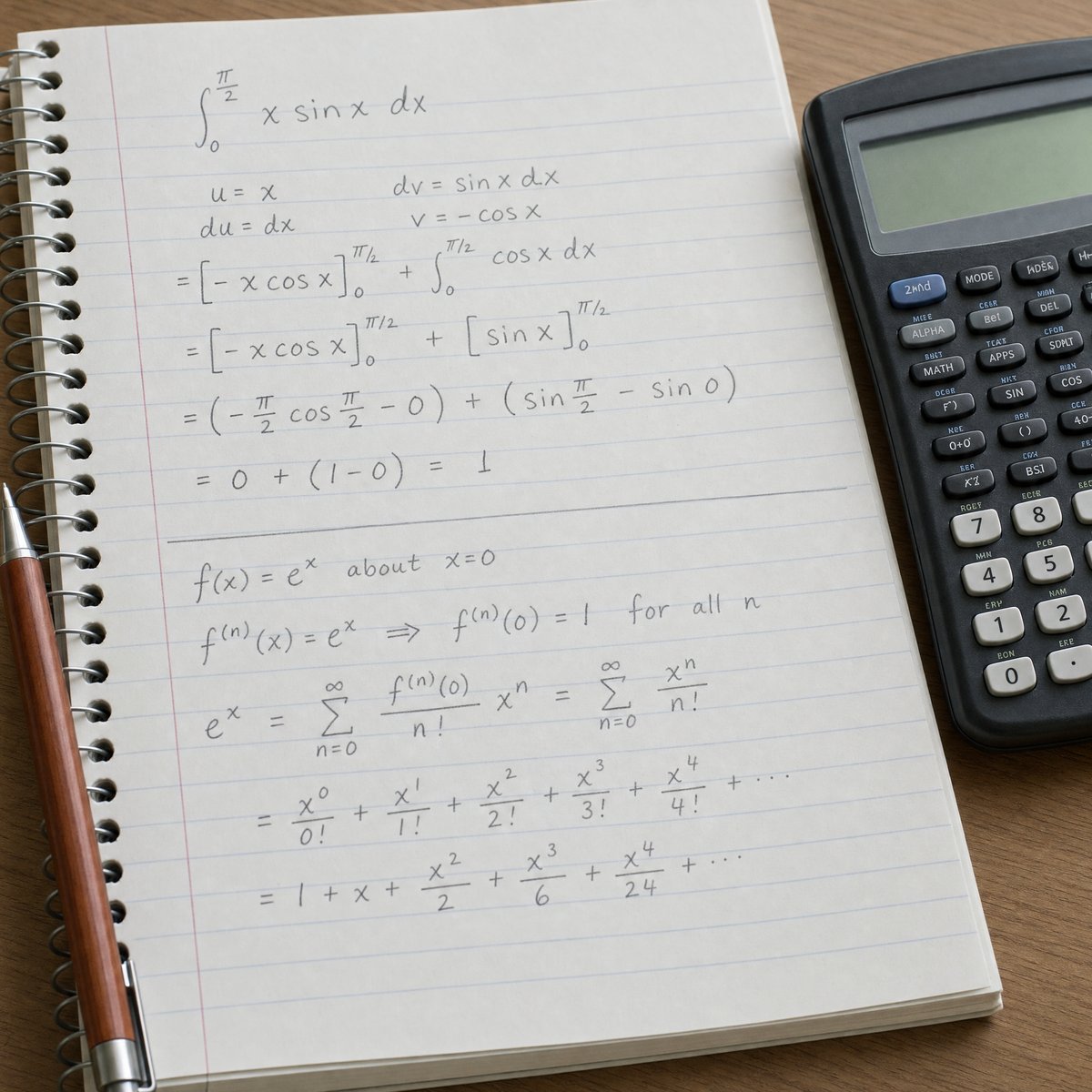
The Euclid is CEMC’s flagship senior mathematics contest, written primarily by Grade 12 students (though strong younger students write it too). It usually takes place in early April, with a typical duration of about 2.5 hours and 10 questions. The contest is not multiple choice. Most questions ask for full written solutions, and a large share of the marks come from your reasoning, not just the final number. That single structural fact changes how you prepare: you are being graded the way a first-year university course grades you, on whether your argument is complete and correct.
The Euclid covers senior secondary topics: algebra and equations, functions, sequences and series, analytic geometry, trigonometry, and number theory, plus a few questions designed to reward genuine problem-solving rather than memorized procedures. For a BC student, the content overlaps heavily with the Pre-Calculus 11 and 12 pathway, which is exactly why students who have a solid grip on that material have a real head start. If you are still consolidating those courses, our guide to the Pre-Calculus 11 to 12 transition in BC maps out the foundation the Euclid assumes you already have.
Why the Euclid Is the Waterloo Admissions Edge
Waterloo is unusually transparent about caring about contests. For applicants to its math and engineering programs, the CEMC contests — and the Euclid above all for Grade 12 — are a recognized signal. Waterloo factors contest performance into its admission process and into eligibility for certain entrance scholarships. The practical takeaway: a good Euclid result is one of the few things a BC student can do that speaks directly to Waterloo in Waterloo’s own language.
A few honest caveats, because the rules change and only the university can confirm the current year’s policy:
- The exact weight changes. How much the Euclid counts, and which scholarships it touches, is set by Waterloo each cycle. Always confirm the current year’s criteria on Waterloo’s official admissions and CEMC pages before building a strategy around a specific score.
- It is a complement, not a substitute. A Euclid score supports a strong BC transcript; it does not rescue a weak one. Waterloo still reads your Grade 12 marks and your Admission Information Form.
- It is not only for Waterloo. Even if a student later chooses UBC, SFU, Toronto, or a US school, the reasoning skills the Euclid builds transfer directly to first-year calculus and to the SAT, AP, and IB pathways many BC families are already navigating.
So the “edge” is real but specific: it is strongest for the Waterloo-bound Grade 12 student, and it compounds with everything else on the application rather than replacing it.
What the Questions Actually Look Like
The Euclid is built as a ramp. The early questions are accessible to any well-prepared Grade 12 student; the later ones are genuinely hard and are where contest-level thinking shows up.
- Early questions (roughly 1–4): Direct algebra, functions, and geometry. These reward speed, accuracy, and clean arithmetic. Most prepared students should aim to secure these in full.
- Middle questions (roughly 5–7): Multi-step problems combining two or three ideas — for example, a sequence problem that turns into an equation, or a geometry setup that needs trigonometry to finish. Partial marks matter here, so writing a clear, structured solution pays off even when you don’t reach the end.
- Late questions (roughly 8–10): Number theory, clever algebraic manipulation, and problems that require an insight rather than a procedure. These separate top scorers. You are not expected to fully solve all of them; you are expected to make real progress and present it clearly.
Because full written solutions are marked, how you communicate is part of the score. A correct final answer with no justification can lose marks; a not-quite-finished solution with sound reasoning can earn them. This is the single biggest mindset shift for BC students used to BC’s competency-based assessment, where you are accustomed to demonstrating understanding along the proficiency scale (Emerging, Developing, Proficient, Extending) rather than writing formal contest proofs.
How to Prepare: A Realistic Timeline
Good Euclid preparation is not cramming. It is a few months of structured problem-solving on top of a secure Pre-Calculus 12 base. Here is a sensible shape for a Grade 12 student writing in April.
3–4 months out: build the base
Make sure the Pre-Calculus 11/12 toolkit is automatic — factoring, the quadratic and its discriminant, function transformations, logarithms, the unit circle, and basic sequences. You cannot do contest-level work while the fundamentals still cost you effort. This is also the right time to decide whether you are aiming for “secure the early questions” or “compete for a strong score,” because the two goals lead to different study plans.
2–3 months out: work past papers
CEMC publishes years of past Euclid contests and full solutions for free. This is the single most valuable resource and it is the heart of any serious plan. Work them under realistic conditions, then study the official solutions — not just to check the answer, but to absorb the method. Keep an error log: every problem you miss goes into a list sorted by why you missed it (concept gap, computation, or “didn’t see the trick”). The pattern in that log tells you exactly what to drill.
1 month out: write full mock contests
Sit complete past papers in one 2.5-hour block. This trains pacing — knowing when to abandon a hard question and move on is a learned skill, and it is where many capable students lose marks. Write full solutions by hand, the way they are marked, so that clear mathematical writing becomes a habit and not an afterthought.
Final two weeks: sharpen, don’t cram
Review your error log, re-solve the problems that beat you, and keep your writing clean. Sleep matters more than one more hard problem the night before.
Students who already train for the AMC and other competition math in Vancouver will recognize this rhythm — past papers, error logs, timed mocks — because it is the same engine that drives all serious contest preparation. The Euclid simply adds the demand for full written solutions.
Where a Tutor Helps (and Where It Doesn’t)
You do not need a tutor to write the Euclid, and plenty of students prepare well on their own with CEMC’s free materials. Where one-to-one help earns its keep is in the parts that are hard to self-diagnose: spotting why your solutions lose marks, learning to write a proof-style argument that a marker will accept, and getting feedback on the middle and late questions where there is often more than one valid path. A tutor who has worked through Euclid-style problems can compress months of trial and error into targeted feedback on your actual error log.
On Tutriva, families browse and choose a tutor directly, the first lesson is free so you can test the fit before committing, and pricing is a transparent flat monthly fee rather than a per-hour meter — which suits a multi-month contest-prep arc far better than an hourly model. The point is matching a student to someone who has genuinely done this kind of mathematics, not buying a brand.
Frequently Asked Questions
When is the Euclid written, and who should write it?
The Euclid is typically written in early April and is aimed at Grade 12 students, though strong younger students also write it. If you are a Grade 12 student considering Waterloo math or engineering, it is the contest to prioritize. Confirm the exact date each year on the CEMC website.
Do I have to be a “math contest person” to benefit?
No. Even a moderate score is a positive signal on a Waterloo application, and the preparation strengthens the exact algebra and reasoning skills you will use in first-year calculus regardless of where you enrol. The early and middle questions are within reach for any well-prepared Grade 12 student.
How much does the Euclid count for Waterloo admission and scholarships?
Waterloo factors CEMC contest results into admission and certain entrance scholarships, but the exact weight and scholarship criteria are set by the university each cycle. Treat the Euclid as a strong complement to your transcript, and always verify the current year’s policy directly with Waterloo’s official admissions and CEMC pages rather than relying on a fixed number.
What is the single best preparation resource?
CEMC’s free archive of past Euclid contests with full official solutions. Work them under timed conditions, study the solutions for method, and keep an error log. Everything else — a course, a tutor, a study group — should be built around that core.
Is the Euclid only useful if I get into Waterloo?
No. The written-solution practice and the problem-solving habits transfer directly to university mathematics and to other standardized pathways, so the time is well spent even if your plans change.
Ready to build a Euclid plan around your student’s actual strengths and gaps? Find a tutor on Tutriva — browse profiles, take a free first lesson, and start with someone who has done this mathematics, not just taught the textbook.