
SSAT vs ISEE in BC: A Parent’s Guide to Independent School Admissions Tests
| Title | SSAT vs ISEE in BC: A Parent’s Guide to Independent School Tests |
| Meta description | A 2026 Greater Vancouver guide to the SSAT and ISEE for BC families: which schools accept them, what’s tested, and when a tutor genuinely helps. |
| Primary category | Test Prep (id 18) |
| Tags | for-parents, test-prep, ssat, isee, independent-school, vancouver, west-vancouver, ages-7-12, ages-13-17 |
| Featured Image alt | A Grade 7 student in West Vancouver studying for the SSAT at a desk with a practice book and pencil |
| Inline Image alt | A close-up of a student’s hand filling in an SSAT-style multiple-choice answer sheet |
If you are a BC family looking at independent schools, sooner or later you will run into two acronyms: SSAT and ISEE. The two tests have similar purposes but different formats, different scoring systems, and very different relevance to BC families.
This guide is for parents in Vancouver, Burnaby, Richmond, Surrey, Coquitlam, North Vancouver, West Vancouver, and White Rock who are starting to look at independent schools and need to understand what each test actually is, which one applies, and when a tutor genuinely helps.
SSAT and ISEE in plain English
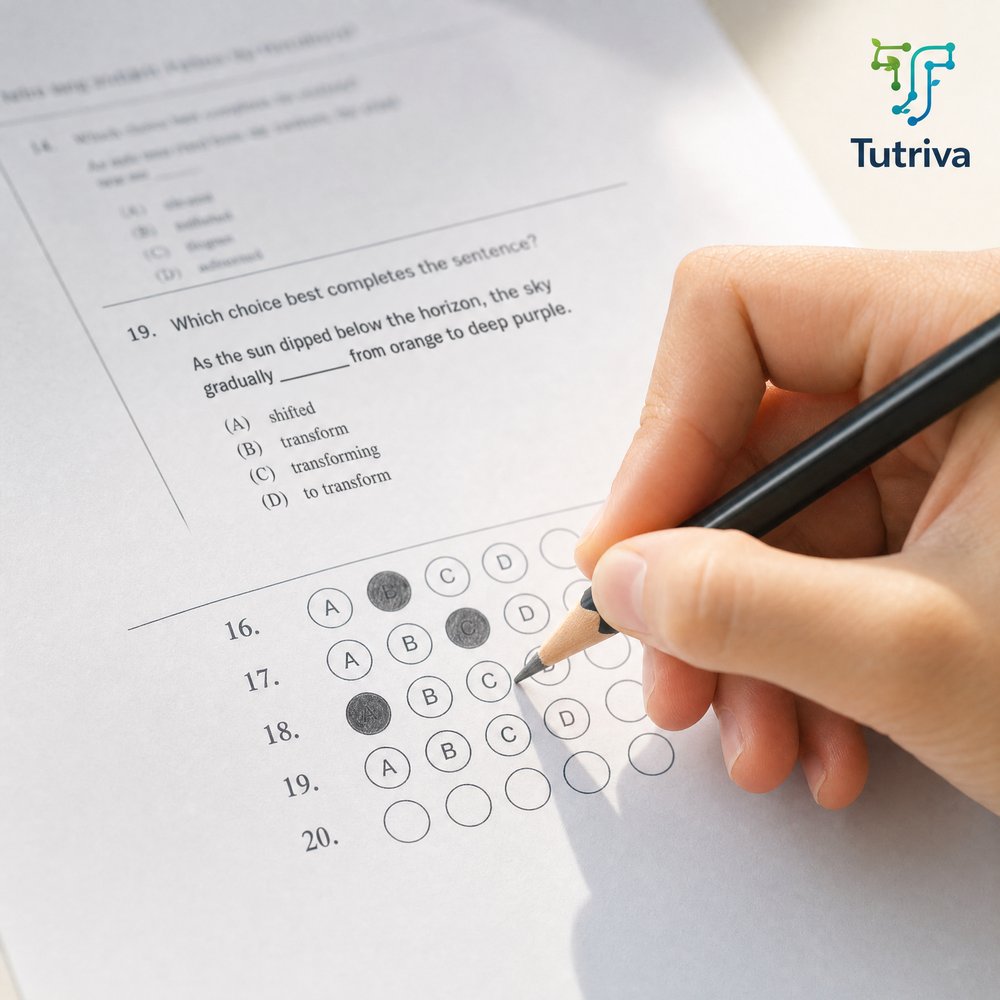
The Secondary School Admission Test (SSAT) is administered by The Enrollment Management Association (EMA). It is the more commonly used standardized admissions test for independent and boarding schools across Canada and parts of the United States. The SSAT has three main levels:
- Elementary Level (currently enrolled in Grades 3–4, applying for Grades 4–5)
- Middle Level (Grades 5–7, applying for Grades 6–8)
- Upper Level (Grades 8–11, applying for Grades 9–12)
The test covers Quantitative (math), Verbal (vocabulary and analogies), Reading Comprehension, and a writing sample. The Middle and Upper levels include two quantitative sections. The SSAT is offered in three delivery modes: paper-based at flex and standard test sites, in-person computer-based at Prometric test centres, and online proctored at home through “SSAT at Home.” Multiple test dates are available each year.
The Independent School Entrance Exam (ISEE) is administered by the Educational Records Bureau (ERB). It is more commonly used by independent schools in the United States, especially in New York and California, and is less common at BC independent schools. ISEE has four levels (Primary, Lower, Middle, Upper) and covers Verbal Reasoning, Quantitative Reasoning, Reading Comprehension, Mathematics Achievement, and an essay.
For most BC families, SSAT will be the relevant test. ISEE matters mainly for families also applying to US schools that specifically require it.
Which BC schools care about which test
Independent school admissions practices change year to year, so families should always confirm directly with each school’s admissions office. As a general pattern:
Schools that commonly accept or require the SSAT include a number of Greater Vancouver and Vancouver Island independents, particularly those that take boarders and those that are part of the broader North American independent school network. Boarding schools on Vancouver Island typically take the SSAT seriously, since their applicants come from across Canada and overseas — though specific requirements vary each year and should be verified directly.
Some BC independents rely more heavily on their own entrance assessments, transcripts, and interviews than on a national standardized test. They may accept SSAT scores but not require them, or treat the test as one input among several.
ISEE rarely appears as a required test for BC schools. Where it appears, it is usually because the family is also applying to US schools.
The honest answer for most BC families is to confirm directly with each target school’s admissions office. Treat any general advice, including this article, as a starting point rather than the final word.
What each test actually measures
Both tests are designed to measure reasoning, not curriculum mastery alone:
- Quantitative / Math. Number sense, arithmetic operations, percentages, ratios, basic algebra, geometry, and data interpretation. The SSAT Upper Level reaches into early Algebra 1 and basic geometry. ISEE Upper Level reaches a similar level.
- Verbal Reasoning. Vocabulary in context, synonyms, and (on the SSAT) analogies. Strong readers do well here, and students who build vocabulary deliberately do even better.
- Reading Comprehension. Passages followed by inference, main-idea, and tone questions. The passages on both tests are deliberately above grade level.
- Writing Sample / Essay. The Middle and Upper SSAT writing sample is 25 minutes; ISEE essay timing is similar. Both feel generous but are strictly timed. The writing is unscored but sent to schools as a sample of the student’s thinking.
Both tests reward students who read widely, build vocabulary deliberately, and have solid arithmetic and pre-algebra fluency. Neither test rewards last-minute cramming the way some content tests do.
The single biggest preparation mistake BC families make
The most common preparation mistake is starting late and treating the SSAT or ISEE like a curriculum-based school exam. These admissions tests reward patterns of reading and thinking that take months to build. Three weeks of frantic problem packs in the summer before the test produces a small bump at best.
A more effective rhythm for BC families:
- 12 months out. Start serious reading. Anything age-appropriate that pushes the student’s vocabulary slightly, such as biographies, news features, and well-edited fiction. Twenty minutes a day adds up.
- 6 months out. Take one full practice test under realistic timing to establish a baseline. Identify weak sections honestly. Begin focused work, two to three sessions a week, on the weakest one or two areas.
- 3 months out. Move to mixed-section practice tests every two or three weeks. Review every wrong answer in writing.
- 2 weeks out. Reduce intensity. Sleep, food, calm, and one final timed practice test. No new content.
A tutor can compress this timeline somewhat, but not endlessly. Reading habit cannot be rushed.
When a tutor genuinely helps
A tutor is worth bringing in when:
- The student has taken one practice test and the result is well below the target percentile range suggested by the schools the family is considering.
- The student has specific weaknesses in vocabulary, geometry, or pre-algebra that need targeted work.
- The family wants someone who can read the student’s writing samples and give substantive feedback.
- The student is shy of asking questions and benefits from a 1:1 setting where there is no audience.
A tutor is usually not worth it when:
- The target schools do not strictly require the test, and the student’s transcript and interview will carry the application.
- The student is reading widely on their own, scoring near the target on practice tests, and just needs steady practice rather than 1:1 sessions.
- The student is being prepped against their will and is increasingly resentful. Resentful prep tends to produce poorer results, regardless of how many hours go in.
How to find an SSAT or ISEE tutor in Greater Vancouver
Ask about the specific test. SSAT and ISEE are similar in spirit but different in detail. A tutor who has worked specifically with SSAT Upper Level can describe the question types, scoring, and pacing without hesitation. A tutor who waves vaguely at “general standardized test prep” is the wrong fit.
Ask about realistic targets. Some schools publish a typical SSAT percentile range for admitted students; others do not. A good tutor can describe the competitive landscape honestly and give a fair read on where the student currently sits, without promising a specific outcome.
Ask about the writing sample. Many tutors skip this. A strong tutor will read multiple writing samples and give detailed feedback on argument, structure, and voice, not only grammar.
Online or in-person both work. The SSAT Upper Level is increasingly delivered by computer at Prometric centres and via “SSAT at Home,” which makes online tutoring with shared documents a natural fit. A Burnaby or Richmond family that travels often during the prep window may prefer the online option for that reason.
Tutriva and SSAT/ISEE support
Tutriva is a tutor–student platform serving Greater Vancouver: Vancouver, Burnaby, Richmond, Surrey, Coquitlam, North Vancouver, West Vancouver, and White Rock. Tutors set their own rates and keep what they earn; Tutriva does not take a commission on lessons. Parents browse tutors by subject and location, message directly, and book a free intro session before committing. Tutriva is an independent platform and is not affiliated with, endorsed by, or partnered with any specific independent or boarding school.
Families preparing for the SSAT or ISEE can post a short request, for example “Grade 7 student in North Vancouver, applying to a Greater Vancouver girls’ independent school next year, needs SSAT Upper Level prep with emphasis on vocabulary and the writing sample”, and get matched with tutors who have done this specific work before. (For families also considering broader academic challenge work in parallel, see our parent’s guide to academic competitions in Greater Vancouver.)
Frequently asked questions
Do BC independent schools really require the SSAT?
It varies. Some require it, some accept it, some use their own assessment instead. Always confirm directly with each school’s admissions office, as policies change year to year.
Should my child take the SSAT and the ISEE?
Rarely necessary. Most BC families need only the SSAT. The ISEE comes into play mainly when the family is also applying to specific US independent schools that require it.
When should we register for the SSAT?
Test dates fill up, particularly in the fall and winter before private school decisions. Registering 8 to 12 weeks ahead is sensible. Some students sit the test twice; check each target school’s policy on multiple scores.
How important is the writing sample?
The writing is unscored but is sent to every school the family selects. Strong writing samples can carry a borderline application; sloppy ones can quietly weaken a strong one.
Is online SSAT prep effective?
Yes, particularly because the test itself is now delivered by computer in many formats. Online prep with a tutor who knows the digital test format works well for most students.
The honest takeaway
The SSAT and ISEE are not really tests of curriculum. They are tests of reading habit, vocabulary, and reasoning under time pressure, built up patiently over many months. BC families who start a year out, take the practice tests honestly, and bring in targeted help where it matters tend to find the process manageable. Families who start three weeks before test day tend to find it stressful, regardless of how much money goes in.
Looking for an SSAT or ISEE tutor in Greater Vancouver? Browse test prep tutors by city on Tutriva, or post a one-minute request describing your target schools and your child’s current level.