
The Grade 8 Math Wall in BC: What Changes and How Parents Can Help
| Title | The Grade 8 Math Wall in BC: What Changes and How Parents Can Help |
| Meta description | A 2026 Greater Vancouver guide: why some BC students hit a wall in Grade 8 math, what really changes from Grade 7, and how parents can help. |
| Primary category | Math Tutoring (id 14) |
| Tags | for-parents, math-tutor, grade-8-math, bc-curriculum, vancouver, burnaby, richmond, ages-13-17 |
| Featured Image alt | A Grade 8 student in Vancouver working on an algebra problem at a desk, math textbook open beside them |
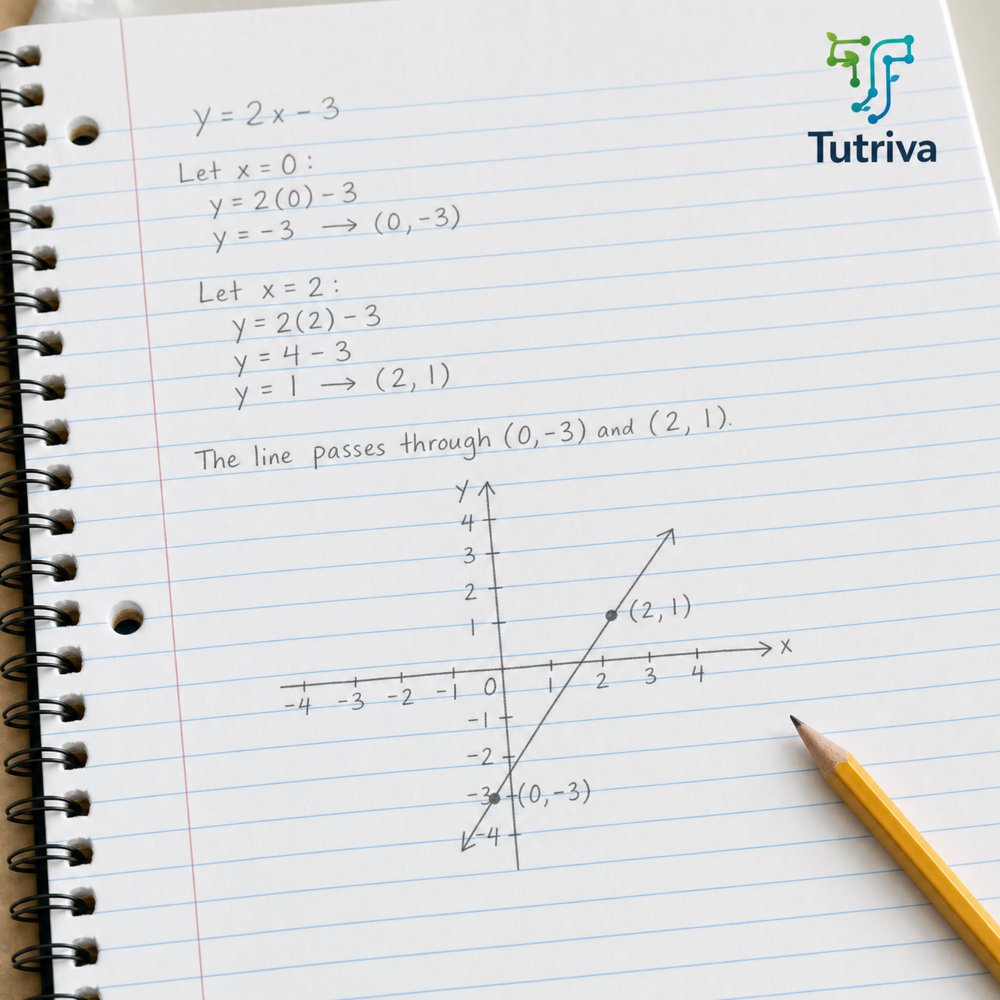
| Inline Image alt | A close-up of a Grade 8 math notebook showing linear equations and a coordinate plane |
In Greater Vancouver, it is a familiar springtime conversation in parent chats: a child who was an A student in Grade 7 has suddenly found Grade 8 math hard. Sometimes the parent is surprised. Sometimes they are worried. We have come to call this pattern the “Grade 8 math wall” — a useful nickname even if it is not an official term — because it is the visible point where several quiet shifts in the BC curriculum land at the same time.
The wall is not really sudden. It is the place where earlier shortcuts stop working, and the kids who hit it hardest are often the ones who looked the most comfortable in Grade 6 and 7. This guide explains what actually changes between Grade 7 and Grade 8 in BC, why some students stall even when nothing seems wrong, and when a math tutor is worth bringing in.
It is written for parents in Vancouver, Burnaby, Richmond, Surrey, Coquitlam, North Vancouver, West Vancouver, and White Rock.
What actually changes in BC’s Grade 8 math
Grade 8 mathematics in BC sits at a real transition point. Several content threads that were introduced gently in earlier grades become formal expectations:
- Integers in all four operations. Working with negative numbers fluently.
- Fractions, decimals, and percentages together. Multi-step problems that mix forms, including conversions.
- Ratios and rates. Proportional reasoning becomes a tool, not just a topic.
- Square roots, perfect squares, and the Pythagorean theorem. These are all Grade 8 content, not “preparation” — and they often appear in word-problem form.
- Linear relations. The first formal exposure to algebra with variables, expressions, and simple linear equations, often visualized on a coordinate plane.
Individually, none of these are catastrophic. Together, they add up to a year where students have to hold more abstract ideas in mind at once, and where the time between “we learned this” and “you’re being tested on it” is shorter than it used to be.
Why kids who were fine in Grade 7 stall in Grade 8
Three patterns show up regularly with Grade 8 students:
Pattern 1. The fluency gap that finally shows. A child who never quite memorized times tables, or who relied on a calculator for fractions, can usually muddle through Grade 6 and 7. In Grade 8, when problems chain three or four operations together, the missing fluency multiplies. Each individual step takes too long, and by step four the student has lost the thread. We see this with strong Burnaby and Richmond students who simply never had to build arithmetic speed.
Pattern 2. The leap into abstraction. Earlier grades let students rely on pictures, manipulatives, and concrete examples. Grade 8 introduces variables (x, y) that do not stand for anything visible. Some students take to this naturally. Others need extra time to make peace with the idea that a letter can stand for a number you have not yet found.
Pattern 3. The “I never had to study math” student. Plenty of bright Grade 7 students never developed a real study habit because they did not need one. Grade 8 is often the first year where listening in class and skimming the textbook stops being enough. The skill of sitting down with a problem set and working through it deliberately is a habit, and habits take time to build. This is particularly common with students moving from a smaller elementary school in places like North Vancouver or White Rock into a much larger middle or secondary school.
Most students who stall in Grade 8 are showing one of these three patterns, sometimes two. None of them mean a child is bad at math. They mean something about the way the child has been doing math up to now no longer scales.
What good Grade 8 math support looks like
The instinct, understandably, is to drill more problems. That helps for fluency gaps but does little for the abstraction and habit issues, and can backfire when a kid is already frustrated.
A more effective approach for most Grade 8 students has three parts:
- Diagnose first, drill second. Before assigning practice, figure out which of the three patterns is dominant. A tutor or attentive parent can usually tell in two or three sessions: does the child stall on arithmetic inside a multi-step problem, on translating words into expressions, or on simply sitting down to do the work?
- Build the right kind of practice. For fluency gaps, short daily sets of about ten focused problems. For abstraction issues, work the same concept in three forms (visual, verbal, symbolic) until the student can move between them. For habit issues, set a small, non-negotiable weekly rhythm at the same time and place each week.
- Stay close to the BC curriculum. Grade 8 math in BC is specific enough that tutoring should mirror what the student is doing in class. Generic worksheets pulled from American sites can introduce notation the student does not yet recognize, which adds confusion rather than removing it.
A good tutor does not replace the classroom teacher. They help the classroom teacher’s work land.
When to bring in a tutor
Bring in a tutor when:
- Two or more units in a row have come home with poor marks, and the student says they did not understand the unit while it was being taught.
- The child is starting to use phrases like “I’m just not a math person,” which is rarely true at age 13 but becomes self-fulfilling if left unchallenged.
- Family homework conversations have escalated to consistent frustration on both sides.
- Foundations of Mathematics and Pre-Calculus 10 (FMP 10) is on the horizon for Grade 10, and the family wants to keep the Pre-Calculus pathway open into Grade 11 and 12.
Hold off on a tutor when:
- One bad unit followed by recovery on the next. A single dip is normal and not a wall.
- The student is engaged with the material but moving slowly. Slow is fine in Grade 8.
- The real issue is a stressful semester (a move, a friendship problem, a coach change), in which case the family conversation comes first.
How to find a Grade 8 math tutor in Greater Vancouver
Most math tutors will take a Grade 8 student. Not all are equally strong at this specific level, which sits between elementary fluency work and senior high algebra.
Ask about diagnosis. “Before assigning practice, how do you figure out where my child is actually stuck?” A strong tutor will describe how they probe, not just how they teach.
Ask about pacing with the BC curriculum. “If my child is heading into FMP 10 in Grade 10, what does that mean for Grade 8 right now?” A strong tutor can connect today’s work to next year’s options without overselling.
Ask about how they handle abstraction. Variables, linear relations, and the coordinate plane are where many students stall. A tutor who can describe two or three ways to present these (a visual, a verbal example, a symbolic form) is the one you want.
Online or in-person both work. Online has the advantage of consistent scheduling, especially for families managing after-school sports and activities across multiple cities in Greater Vancouver.
Tutriva and Grade 8 math support
Tutriva is a tutor–student platform serving Greater Vancouver: Vancouver, Burnaby, Richmond, Surrey, Coquitlam, North Vancouver, West Vancouver, and White Rock. Tutors set their own rates and keep what they earn; Tutriva does not take a commission on lessons. Parents browse tutors by subject and location, message directly, and book a free intro session before committing.
Parents looking for a Grade 8 math tutor can post a short request, for example “Grade 8 student in North Vancouver, was an A student in Grade 7, struggling with integers and linear relations, looking for a once-a-week tutor who can diagnose where the gap is”, and get matched with tutors whose style fits. (For families also weighing whether their child is ready for academic competition math, see our parent’s guide to academic competitions in Greater Vancouver.)
Frequently asked questions
Is Grade 8 really harder, or does it just feel that way?
Both. The content takes a real step up (integers in all four operations, linear relations, square roots and Pythagorean theorem), and at the same time the support structure of elementary school, with daily small assignments and frequent check-ins, fades. The combination is what families feel.
My child is in a BC independent or accelerated program. Is the wall different?
Sometimes earlier. Accelerated math programs often introduce algebra in Grade 7 or even Grade 6, which means the wall moves earlier. The underlying fixes are the same.
Should we worry about FMP 10 already in Grade 8?
Not in a panicked way. But Grade 8 is where the foundation is laid for the Foundations of Mathematics and Pre-Calculus 10 course in Grade 10. A solid Grade 8 makes Grade 9 and 10 noticeably easier; a shaky Grade 8 makes them noticeably harder.
Is one session a week enough?
For most Grade 8 students working on a typical wall, one focused 60-minute session a week with consistent at-home practice in between is usually a sensible starting point. Two sessions a week is reasonable during a difficult unit but rarely needed all year.
The honest takeaway
The Grade 8 math wall in BC is real, but it is not a verdict. It is the predictable point where earlier shortcuts stop working, and the families who notice it early, name what is actually going on, and respond with patience and structure tend to work through it within a term. A good tutor accelerates that process; it does not replace the patience.
Looking for a Grade 8 math tutor in Greater Vancouver? Browse math tutors by city on Tutriva, or post a one-minute request describing what your child is stuck on.