
The BC Numeracy 10 Graduation Assessment: A Complete Prep Guide (2026)
If your child is in Grade 10 in British Columbia, they will sit a provincial test that confuses a lot of families: the Graduation Numeracy Assessment, usually just called Numeracy 10. It is a graduation requirement, but it does not look like a normal math exam, it does not count toward a course grade in the usual way, and many parents only hear about it a few weeks before it happens.
This guide explains what the BC Grade 10 Numeracy Assessment actually is, how it is structured around five numeracy processes, the kinds of questions to expect, where students lose marks, and how to help your child prepare without panicking.
What the BC Numeracy 10 Assessment Is (and Isn’t)
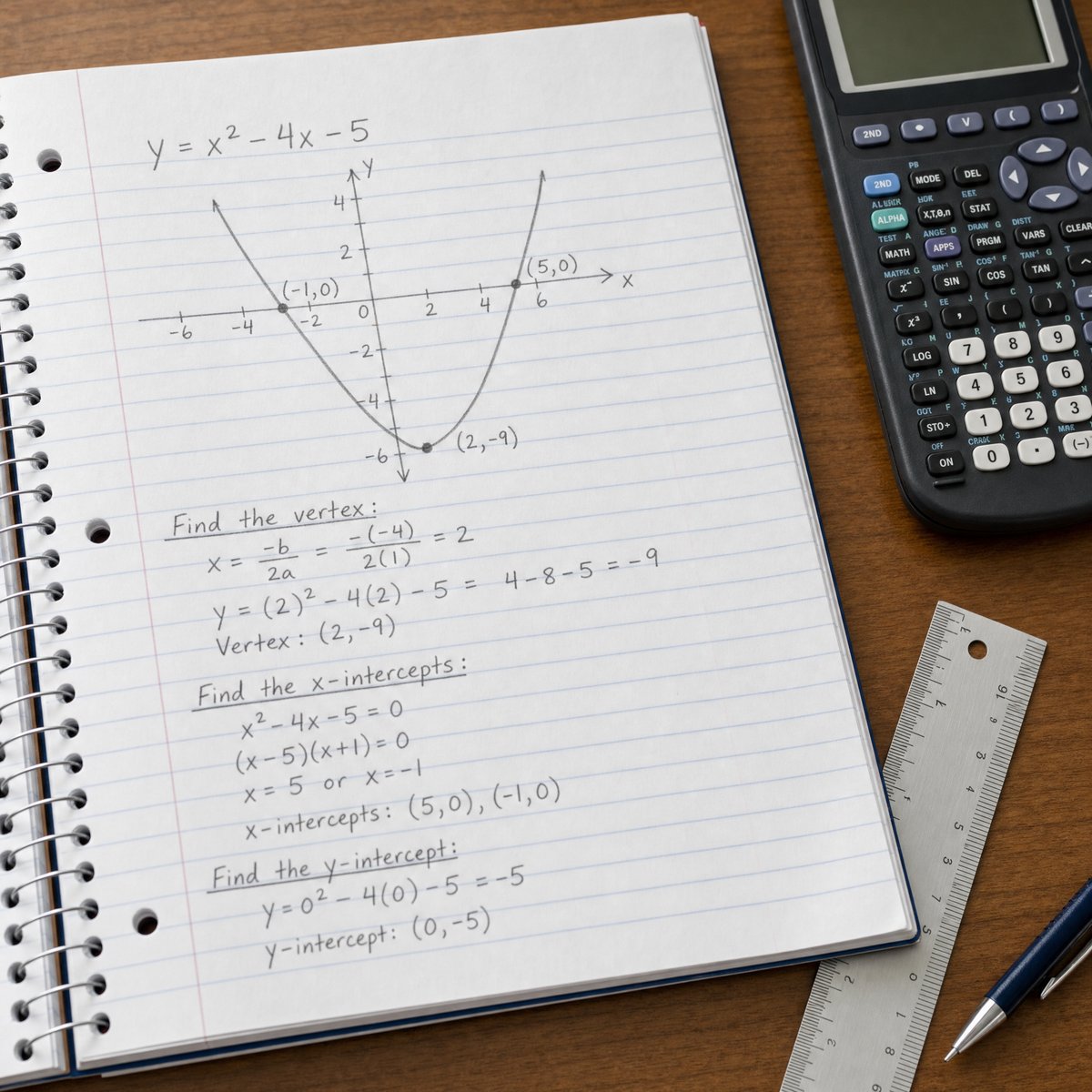
The Graduation Numeracy Assessment is one of the provincial assessments BC students must complete to graduate, alongside the Grade 10 and Grade 12 Literacy Assessments. Students generally write it in Grade 10.
A few things that surprise parents:
- It is not a Math 10 final. It does not test the Math 10 curriculum chapter by chapter. Instead, it tests whether a student can use numeracy to work through real-world situations.
- It is cross-curricular. Questions are set in everyday contexts (money, planning, measurement, data, fairness, risk) rather than in pure-math language.
- It uses a proficiency scale, not a percentage. Results are reported on a scale (Emerging, Developing, Proficient, Extending) rather than as a mark out of 100. Because the exact rules and reporting can change year to year, always confirm current details on the official BC Ministry of Education assessment page or with your school.
In short: it rewards thinking, not memorized formulas. That is exactly why strong “course” students sometimes underperform, and why preparation looks different from cramming for a unit test.
The 5 Numeracy Processes (The Real Backbone of the Test)
The assessment is built around five numeracy processes. Almost every task is designed to make a student move through some or all of them. Understanding these is the single most useful thing a family can do.
- Interpret – Read a real-world situation and figure out what is actually being asked. What information matters? What is just context?
- Apply – Choose and use the right mathematical tools or strategies (estimation, ratios, percentages, measurement, basic probability, graphs).
- Solve – Carry out the math accurately and follow it through to an answer.
- Analyze – Check whether the answer makes sense, compare options, and consider trade-offs or assumptions.
- Communicate – Explain the reasoning clearly, in words and/or math, so someone else can follow the logic.
The big shift for many students is that Communicate and Analyze carry real weight. A correct number with no explanation, or a tidy explanation built on a misread question, both lose marks. The test wants to see the thinking, not just the result.
Sample Question Types: A Walkthrough
You will not find a “head start” textbook for this assessment, the public materials are mostly official sample sets. Here are the broad task types families should expect, described generically so your child can recognize the pattern:
- Planning and budgeting tasks. Given prices, a budget, and some constraints, decide what is possible and justify the choice. (Tests Interpret + Apply + Analyze.)
- Comparison and “best value” tasks. Two or three options, students compute and argue which is better and under what conditions. (Heavy on Analyze + Communicate.)
- Measurement and scaling tasks. Real layouts, recipes, maps, or materials where students use ratios, area, or unit conversion. (Apply + Solve.)
- Data and graph reading. Pull information from a table or chart, then draw a defensible conclusion, sometimes spotting what the data does not tell you.
- Fairness, risk, and chance tasks. Light probability or fairness scenarios where the “right” answer depends on stated assumptions.
Notice the pattern: every task type ends in judgment and explanation, not just arithmetic.
Where Students Lose Marks (Common Failure Points)
Across these task types, the most common reasons students underperform are predictable, and fixable:
- Answering the wrong question. They solve the math they assumed instead of the one being asked. (An Interpret failure.)
- No written reasoning. The work is correct but there is no explanation, so the Communicate criterion is not met.
- Skipping the “does this make sense?” check. A budget answer that is negative, or a measurement that is wildly off, signals a missing Analyze step.
- Stating assumptions in their head, not on paper. Many tasks are intentionally open; the marks come from naming your assumptions, not from guessing the “intended” one.
- Running out of time on explanation. Students spend their minutes computing and leave no time to write the reasoning that actually earns marks.
If your child has shaky number sense from earlier grades, those gaps show up here too. The arithmetic and ratio fluency built in middle school is load-bearing, which is why we flag the Grade 8 “math wall” so many BC families hit as the real origin of many Numeracy 10 struggles.
How to Prepare (Without Cramming)
Because this is a thinking test, the best prep is steady and habit-based, not a weekend marathon.
- Do the official sample assessment together. Work through the publicly released sample, then read the scoring guide so your child sees why responses earn the proficiency they do.
- Practise explaining out loud. Have your child talk through how they would solve a real-world money or measurement problem from daily life. The habit of justifying answers transfers directly.
- Rebuild number fluency if needed. Confidence with fractions, percentages, ratios, and estimation removes most of the friction. A focused BC-curriculum math tutor can target the exact gaps rather than re-teaching everything.
- Always write the reasoning. Train one rule: never submit a numeric answer without a sentence explaining it and any assumptions made.
- Manage time deliberately. Practise leaving a few minutes per task for the explanation, not just the calculation.
Summer (right now) is an ideal low-pressure window to rebuild number sense before the Grade 11 workload arrives.
When to Bring in a Tutor
Most students can prepare with the official samples and a bit of structure at home. Consider extra help when:
- Your child consistently understands the math but freezes on word-heavy, open-ended questions.
- There are real gaps in core arithmetic, fractions, or ratios that make every task harder than it should be.
- Numeracy 10 anxiety is bleeding into their confidence for Pre-Calculus and senior math.
On Tutriva you can find Greater Vancouver tutors with BC-curriculum and UBC/SFU backgrounds, browse profiles directly, and book a free first lesson to see if it clicks, no commitment. A local Vancouver math tutor can run a student through sample tasks and coach the explain-your-reasoning habit specifically. And because Grade 10 sits right before the senior jump, it is also worth thinking ahead to the Pre-Calculus 11/12 transition while you are at it.
Frequently Asked Questions
Does the BC Numeracy 10 Assessment count toward my child’s grade?
It is a graduation requirement and the result appears on the student’s transcript on a proficiency scale (Emerging to Extending), but it is reported separately from course grades rather than as a percentage in a Math 10 mark. Confirm the current reporting rules with your school, as details can change year to year.
What happens if my child does not do well?
Students who do not reach the level they want can typically rewrite the assessment, and the graduation requirement is about completing it. Check your school’s specific retake and scheduling policy, since this is set provincially and administered locally.
Is the Numeracy 10 Assessment the same as the Math 10 exam?
No. It is a cross-curricular numeracy assessment focused on applying math to real situations and explaining reasoning, not a test of the Math 10 course content unit by unit.
Can a calculator be used?
The assessment includes both calculator and non-calculator portions, and basic on-screen tools are typically provided. Have your child practise mental math and estimation so they are not dependent on a calculator for sense-checking.
The Graduation Numeracy Assessment is less scary once you understand it: it is a test of clear, real-world thinking, and clear thinking can be practised. If your child would benefit from working through sample tasks with someone who knows the BC framework, create a free Tutriva account and book a free first lesson with a Greater Vancouver math tutor today.