
ESL Tutor in BC: A Newcomer Family Roadmap for Greater Vancouver (2026)
| Title | ESL Tutor in BC: A Newcomer Family Roadmap for Greater Vancouver (2026) |
| Meta description | A 2026 roadmap for newcomer families: the three stages of English, what BC schools provide, and when an ESL tutor in Greater Vancouver helps most. |
| Primary category | ESL Support (id 22) |
| Tags | for-parents, esl, ell, newcomer, vancouver, burnaby, richmond, surrey, ages-7-12, ages-13-17 |
| Featured Image alt | A parent and child reading a picture book together in a Vancouver home, warm afternoon light |
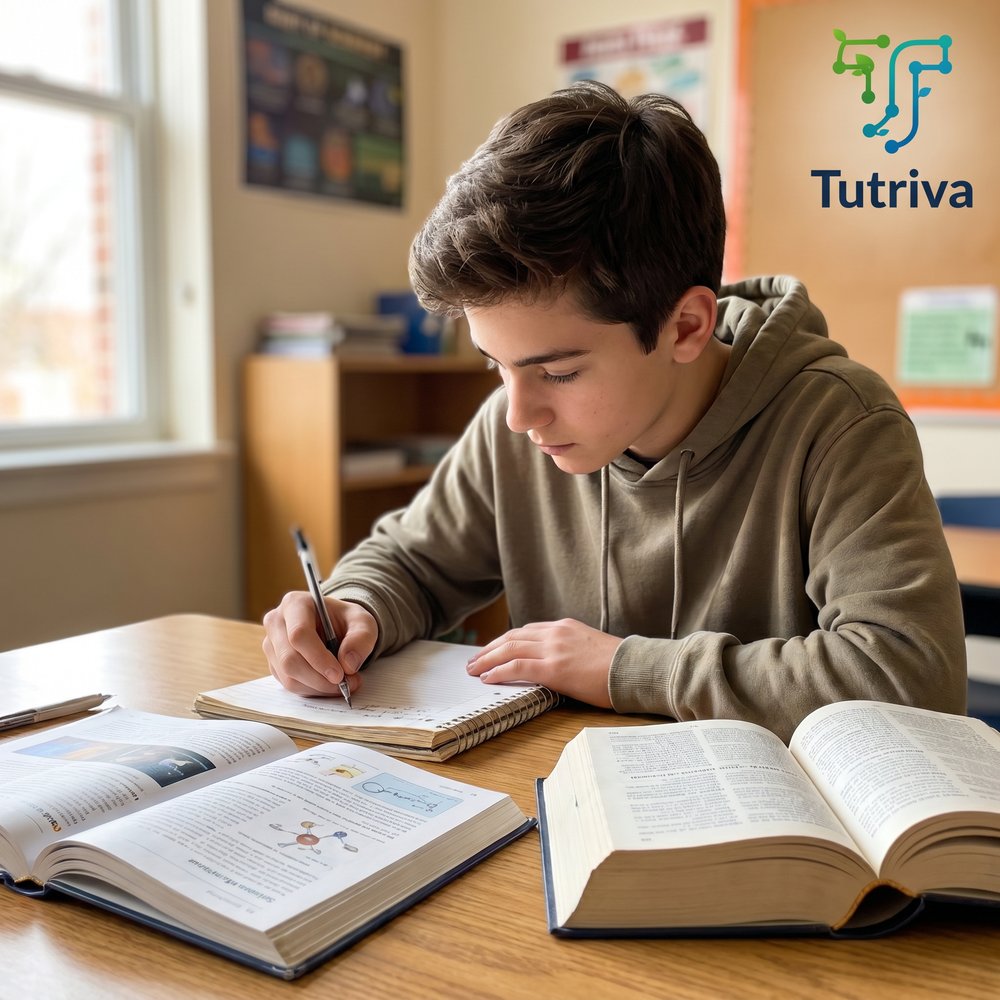
| Inline Image alt | A newcomer student writing English vocabulary in a notebook at a desk, books and a dictionary nearby |
When a family lands in Greater Vancouver — whether in Vancouver, Burnaby, Richmond, Surrey, or one of the smaller districts — the first few months feel like one long English class for the kids. A new school, a new playground, a new way of being asked what’s for lunch. Within months, most newcomer children sound conversational. Within a year, most can hold their own in friendship-level English. For many families, that’s when the question of finding an ESL tutor in Vancouver first comes up.
Then comes the harder part.
Parents quickly discover that “speaking English with friends” and “reading a Grade 7 science textbook in English” are two completely different skills. A child can be confident on the playground and still struggle in social studies. This roadmap is for the parent navigating that second, longer stretch — the one that determines whether a newcomer kid grows into a confident learner in BC schools, or quietly carries a hidden gap into high school.
The three stages of English learning (and where most kids get stuck)
Researchers in second-language education have a useful framework — sometimes called the BICS/CALP distinction — that we’ll translate into plain language for parents:
Stage 1 · Survival English (months 1–6). Greetings, directions, asking for help, ordering lunch. Most kids reach functional survival English within their first six months in BC, especially if they’re young (under 10). Schools and playgrounds do most of this work naturally.
Stage 2 · Conversational English (months 6–24). Holding a sustained conversation, telling a story, making a joke. By the end of this stage, most newcomer kids sound like their Canadian-born peers in casual settings. This is where most parents think their child is “done” with ESL.
Stage 3 · Academic English (years 2–7). Reading a textbook, writing an essay, decoding a math word problem, understanding figurative language in a novel. Academic English takes far longer than conversational English — research consistently puts it at 5 to 7 years for most second-language learners. This is the silent gap that hurts grades in middle and high school.
It’s natural for families to focus heavily on Stage 1 (the early panic) and then ease off at Stage 2 once the child sounds fluent. Stage 3 is where the most under-the-radar work happens. The kid who can banter at recess but freezes when asked to write a Grade 8 lab report is in Stage 3, not Stage 1.
What BC schools provide (and where the gaps usually are)
The BC school system supports English Language Learners (ELL — the term BC uses instead of ESL) through district-funded programs that vary in design across districts like Vancouver, Burnaby, Richmond, Surrey, and Coquitlam.
What schools generally provide:
- A welcome assessment when a new student arrives, placing them into an ELL level.
- ELL teacher support, often pull-out sessions during the regular school day.
- Modified expectations for written work and reading in the early levels.
- Annual reassessment to track progress.
Where the gaps usually appear:
- ELL support is concentrated in the elementary and early-middle years. By high school, formal ELL funding typically tapers off, but academic English demands are at their peak.
- Pull-out sessions tend to run 30–45 minutes a few times a week. That’s helpful for survival English but not enough for academic English on its own.
- Help with content-area English — the specific vocabulary of science, social studies, and math — usually isn’t part of ELL programming. Subject teachers do their best, but they’re not language specialists.
- Many BC teachers report that dedicated writing instruction time is squeezed across elementary and middle years, which can mean newcomer and Canadian-born students alike arrive in high school less practiced at extended writing than their report cards suggest.
This is the gap many newcomer families fill outside school — not to replace what the district provides, but to add what it can’t. (For families also thinking about competition-style enrichment, see our academic competitions parent guide.)
When an ESL tutor actually helps (and when it doesn’t)
An ESL tutor isn’t always the right answer. Be honest about the stage your child is in.
An ESL tutor helps most when:
- The child sounds fluent in conversation but their school writing is well below grade level.
- A teacher has flagged “reading comprehension” or “written expression” as the bottleneck.
- The family speaks the home language at home (which is healthy for cognitive development) and the child’s English exposure outside school is limited.
- The child is in Grade 5 or older, when academic English demand spikes.
An ESL tutor probably isn’t the answer when:
- The child has been in BC less than six months. Schools are still doing the initial work.
- The child has a specific subject struggle (math, science) that is content-driven, not language-driven. A subject tutor fits better in that case.
- The family schedule is already full. Extra tutoring layered onto an overloaded week rarely sticks.
What to look for in a Greater Vancouver ESL tutor
Most parents searching for “ESL tutor in Vancouver” assume any English-speaking tutor will do. They won’t. Newcomer kids need tutors who actually understand the long arc from conversational to academic English.
Background in language teaching, not just native speaking. A native English speaker who has never taught second-language learners may not have the training to help with academic English specifically. Look for a tutor who has taught ELL in a school setting, taught EFL/TESL abroad, or has a teaching credential.
Comfort with the school’s curriculum. A good ESL tutor for a Grade 7 student in Richmond knows what Grade 7 social studies textbooks actually look like in BC. They can pull vocabulary from the textbook rather than from a generic ESL workbook.
Writing focus, not just speaking practice. Many newcomer kids speak well by the time families seek help. The deeper need is writing — paragraph structure, transitions, academic vocabulary, citing evidence. Ask the tutor: “what does a writing-focused session with you actually look like?”
Cultural sensitivity, but not over-correction. Strong ESL tutors don’t try to erase a child’s first language or first culture. They build on what the child already knows. Avoid tutors who treat the home language as a problem.
Tutriva and ESL support
Tutriva is a tutor-student platform serving Greater Vancouver — Vancouver, Burnaby, Richmond, Surrey, Coquitlam, North Vancouver, West Vancouver, and White Rock. Tutors set their own rates and keep what they earn. Parents browse tutors by subject and location, message directly, and book a free intro session before committing.
Newcomer families looking for ESL or ELL support can post a specific request — for example, “Grade 6 student in Surrey, Mandarin home language, needs help with writing essays and reading comprehension for school, evenings online OK” — and get matched with tutors whose background fits. The point is to find a tutor who actually understands the academic English arc, not just any English speaker. Browsing tutors by location across Greater Vancouver is the fastest way to compare options.
Frequently asked questions
How long does it take for a newcomer child to be fully fluent in English?
Conversational fluency commonly takes 1–2 years for young children. Academic English — the level needed to handle BC’s middle and high school content — typically takes 5–7 years, regardless of how quickly a child sounds fluent at recess.
My child sounds fluent — why are their grades dropping in middle school?
This is the classic Stage 2 / Stage 3 gap. Conversational fluency masks academic English limits. The fix is targeted reading and writing support, not more speaking practice.
Should we drop our home language to speed up English?
No. Decades of language-acquisition research support keeping a strong home language. Children who maintain their home language often learn academic English faster, not slower.
Is online ESL tutoring effective for newcomer kids?
For Grade 4 and up — yes, especially for writing-focused sessions. Younger children sometimes need in-person to maintain attention.
The honest takeaway
Newcomer kids in Greater Vancouver are some of the most adaptable learners in the region. The risk isn’t that they won’t learn English. The risk is that the family relaxes too early — at the conversational milestone — and the academic English gap compounds quietly through middle and high school. A targeted ESL tutor in the right window (Grade 5 to Grade 10, usually) can close that gap before grades reflect it.
Looking for an ESL tutor in Greater Vancouver who understands the newcomer family journey? Browse tutors by subject and city on Tutriva, or post a one-minute request describing your child’s stage and language background.