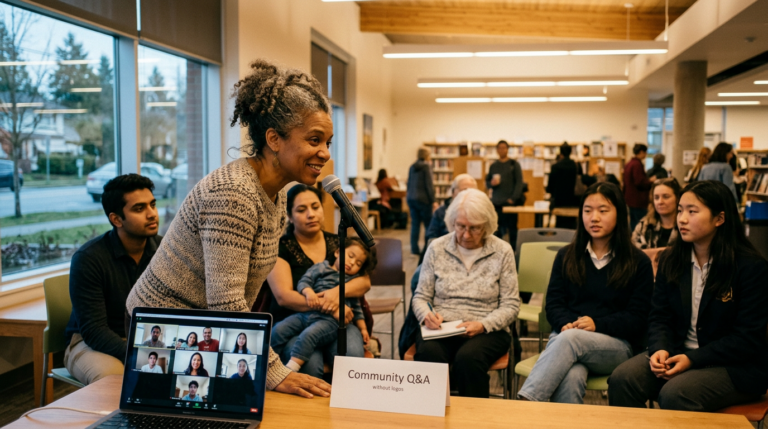
The Real Value of a Mentor Is Not Just Solving a Problem
As answers become easier to obtain, students need adults who can teach judgment, confidence, and direction.
A line often attributed to Plutarch says that the mind is not a vessel to be filled, but a fire to be kindled. The wording is old, but the idea feels unusually current. In an age when students can ask ChatGPT to explain an algebra problem, generate a study schedule, or summarize a biology chapter, families are beginning to ask a harder question: what does a tutor still do that technology cannot?
Twenty years ago, the answer was easier. Many families hired a tutor because a child could not solve a problem and needed someone to explain the steps. That need still exists. But the tutoring market in North America is changing. Students do not only need explanations. They need confidence, structure, judgment, and someone who can help them understand why learning matters beyond the next assignment.
Stanford’s mentoring resources put the point plainly: sometimes guidance from a mentor is life changing; at other times, it is reassuring and affirming. That distinction matters. A tutor may help a student get through a worksheet. A mentor helps a student understand how to think, how to recover from mistakes, and how to make better decisions when the answer is not obvious.

A child often needs confidence before content
Many parents assume that a struggling student primarily needs more instruction. In practice, many children first need a safer relationship with learning. They avoid math because they expect to fail. They rush because they feel embarrassed. They give up because one wrong answer feels like proof that they are not capable.
A strong educator does not ignore content. But the educator also notices the emotional pattern underneath the academic pattern. The child who says, ‘I don’t get it,’ may be saying several things at once: I do not know where to start. I am afraid of being wrong. I do not trust my own reasoning. I have tried before and felt embarrassed.
This is where the best tutors act less like answer machines and more like coaches. They slow the problem down. They ask the student to explain what they noticed. They normalize mistakes without lowering expectations. They help the student experience a small success and then build from it.
A real tutoring case: the AMC student who did not need more worksheets first
One Tutriva mentor described an AMC 8 student who scored around seven or eight points on her first mock test. A quick reading of the score could have produced a simple recommendation: assign more practice problems. But the score did not explain the cause of the struggle.
After reviewing the paper, the mentor found that the student’s weakness was not arithmetic. She knew many of the basic formulas. Her real difficulty was structural recognition. In counting problems, she did not know when order mattered. In painted-cube problems, she did not know how to separate cases. In graph problems, she did not see that the graph often represented a relationship among distance, time, and rate.
The mentor therefore changed the instruction. Instead of increasing volume immediately, the mentor built a recognition system. The student learned to identify models, classify problem types, watch for traps, and explain the structure before calculating. Over time, the most important progress was not a single score increase. It was the student’s new ability to say, ‘I missed the casework,’ or ‘I ignored the change in units,’ or ‘I treated order as irrelevant when it mattered.’
That is the moment when learning becomes durable. Solving one problem helps a student finish the page. Learning how to diagnose an error helps the student improve without depending on the teacher every time.
Grades matter, but education changes more than grades
Parents are right to care about grades, test scores, and admissions. These outcomes affect course placement, scholarships, and opportunity. But the most valuable educational outcomes are often harder to record on a transcript. A student learns not to quit after the first failure. A student learns to check work carefully. A student learns to ask for help before a small problem becomes a crisis. A student learns to take responsibility for progress.
Carol Dweck, the Stanford psychologist whose work popularized the idea of growth mindset, helped change the way many North American educators talk about ability. The difference between ‘I can’t do this’ and ‘I can’t do this yet’ is not motivational decoration. It changes how students interpret difficulty. A fixed-mindset student treats difficulty as evidence of limitation. A growth-mindset student can learn to treat difficulty as information about what to practice next.
A good mentor does not simply tell students to believe in themselves. The mentor gives them a process that makes belief reasonable: clearer steps, better feedback, repeated practice, and visible evidence that effort can change performance.
Scaffolding: support that leads to independence
Education researchers often use the word scaffolding to describe the support a learner receives while developing a skill that is just beyond current independence. The idea is familiar to many teachers and parents. The adult does not remove the challenge. The adult makes the challenge reachable, then gradually removes the support as the student becomes stronger.
This principle matters in tutoring because many families unintentionally look for the wrong outcome. They want the child to understand during the lesson. That is necessary, but not sufficient. A better question is whether the child can begin to work more independently after the lesson.
A mentor’s job is therefore not to create dependency. A mentor’s job is to build the student’s internal tools: how to start, how to check, how to explain, how to notice patterns, how to ask better questions, and how to recover from confusion.
A second case: the honors student who nearly lost confidence
Another Tutriva mentor described an honors algebra student at a competitive private school in Canada. The school was beginning to question whether the student should remain in the honors track. The family worried that the child might not be suited for advanced mathematics.
A closer review showed a more complicated picture. The student’s conceptual understanding was strong. In discussion, he often saw ideas faster than classmates. The problem was output. He dropped negative signs, skipped middle terms, rushed steps, misread instructions, and lost attention at exactly the moment when precision mattered.
The risk was not only a lower mark. The larger risk was identity. A child who once liked mathematics can begin to believe, ‘Maybe I am not a math person.’ Once that belief takes hold, the student may withdraw even when the ability is still there.
The mentor did not respond by lowering the level. The mentor built an execution system: complete written steps, a consistent checking routine, clean notation, and a pause before final answers. The goal was not to make the student dependent on correction. The goal was to make the student more stable under pressure.
The result was not only academic improvement. The student began to revise his own judgment about himself. He did not need to be told that he was talented. He needed a system that allowed his talent to appear reliably.
As students grow older, they need judgment as much as instruction
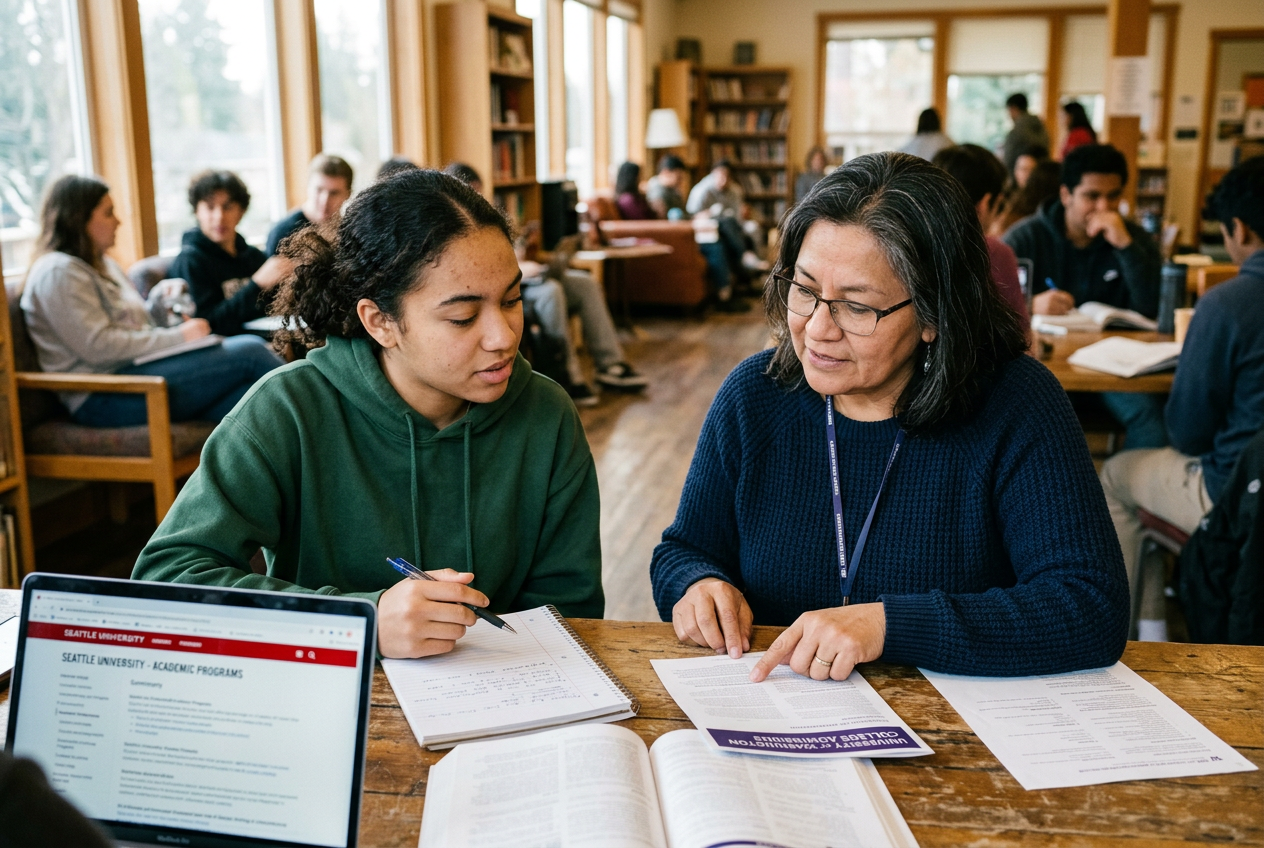
The questions students ask change as they grow. Younger students may ask how to solve a fraction problem or how to prepare for a contest. Older students ask which courses to take, whether research is worth pursuing, how to choose between engineering and medicine, whether a competition fits their goals, or how to build a university application that reflects real interests rather than a checklist.
These questions are not simply content questions. They are judgment questions. Artificial intelligence can describe engineering. It cannot know whether a particular student is drawn to design, systems, failure analysis, teamwork, and long technical projects. A search engine can explain medicine. It cannot help a teenager understand whether the life of a physician fits that student’s temperament, values, and tolerance for responsibility.
Judgment develops through exposure to people who have lived inside the choices students are considering. This is why mentors matter. A retired engineer, a physician, a researcher, a founder, or an experienced teacher can translate an abstract career into a human story. They can explain what the work demands, what it gives back, and what students should explore before committing to it.
A third case: the SAT student who needed a decision system
A Tutriva mentor described a student who entered SAT preparation with a math score around 740. The student was not weak. School grades were strong, and most topics were familiar. But the student could not consistently break into the top range.
For many students at that level, the issue is not that they do not know the content. The issue is that they do not know why they keep losing the same points. They may miss four questions and review the solutions, but they do not build a system that prevents the same type of mistake from returning.
The training therefore shifted away from simply doing more questions. The mentor helped the student identify structure faster, choose methods more deliberately, manage time, and check details under exam conditions. The student moved from ‘I can solve this’ to ‘I can decide how to solve this efficiently and reliably.’
That change matters beyond the SAT. In school, work, and life, people are often not rewarded simply for knowing facts. They are rewarded for making good decisions with incomplete time, imperfect information, and real consequences.
From tutor to mentor
The distinction between a tutor and a mentor is not a hierarchy. Students need both. A tutor helps a student answer the immediate question. A mentor helps a student understand the larger pattern behind the question.
A tutor may ask, ‘How do we solve this problem?’ A mentor also asks, ‘What kind of thinking does this problem require?’ A tutor helps improve a score. A mentor helps the student understand what the score is revealing. A tutor explains a method. A mentor helps the student build a method for learning.
This is especially important in an AI era. Technology can produce answers quickly. It can generate explanations, summarize content, and create practice plans. But technology does not fully understand a student’s hesitation, family pressure, confidence level, attention pattern, or long-term ambition. It cannot replace the relationship through which a student learns to become more independent.
Why this matters for Tutriva
Tutriva’s larger purpose is not only to help families find people who can teach a course. The larger purpose is to build a network where learners can meet educators, mentors, and experienced professionals who help them connect knowledge to the world.
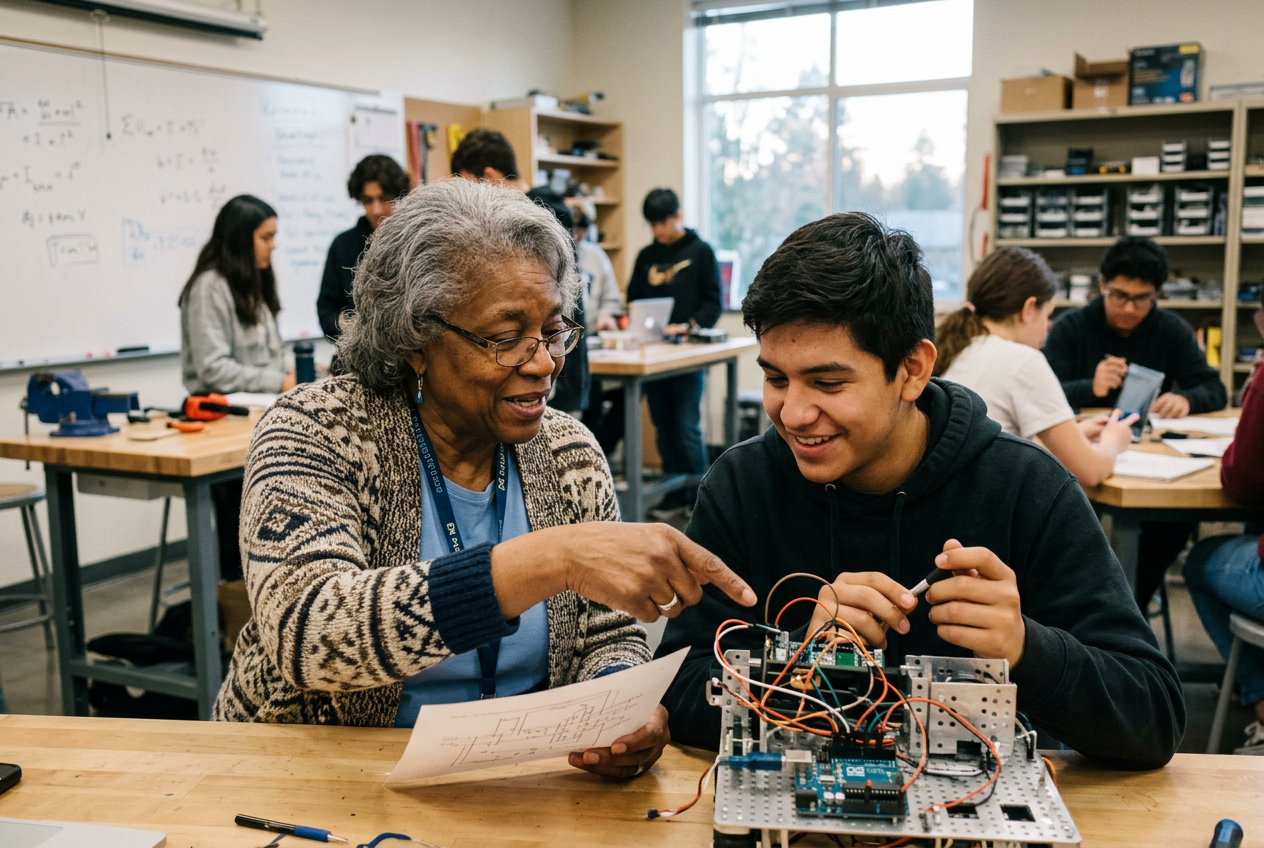
A retired engineer can show a high school student how decades of design work changed the way he understands mathematics. A researcher can help a student see how a question becomes a project. A doctor can explain that medicine is not only science, but also judgment, communication, and responsibility. An experienced teacher can help a student recover confidence before a temporary struggle becomes a lasting identity.
This vision also connects to a larger North American conversation about lifelong learning, education equity, workforce development, and age-friendly participation. Older professionals and second-career educators often have experience that families and students need. Students from well-connected families may already meet such people through private networks. Other students may not. A more open mentoring network can help make access to experience less dependent on family background.
In that sense, mentorship is not only an educational service. It is social infrastructure. It helps knowledge move across age, profession, and community.
Conclusion
The value of a mentor is not limited to teaching a student one problem. The deeper value is helping a student develop the ability to face the next problem with more confidence, better judgment, and a clearer sense of direction.
As answers become easier to obtain, the human parts of education become more important: attention, encouragement, diagnosis, experience, accountability, and care. Great education does not hand the next generation a finished answer. It helps them build the capacity to create answers of their own.
That is the work Tutriva hopes to support: connecting learners, educators, mentors, and professionals so that knowledge can move beyond the classroom, experience can move beyond one career, and growth can move beyond the boundaries of a single lesson.
Tutriva Educator Growth
Helping Educators Build Trust, Visibility, and Impact.
Learn · Grow · Connect · Explore · Impact