
The IB Diploma in BC: A Parent’s Guide to Surviving and Thriving
Tutriva matches IB families across BC with tutors who have taught the Diploma Programme — HL sciences, math, the Extended Essay, and more. Get started today →
The International Baccalaureate Diploma is one of the most demanding — and most respected — paths a BC student can take. Universities worldwide know exactly what an IB Diploma represents: a student who can handle a heavy, balanced workload and think independently. But the program’s structure surprises many families, and the workload catches even strong students off guard. This guide explains how the IB Diploma actually works and where focused support makes the biggest difference.
How the IB Diploma is structured
Over the final two years (roughly Grades 11-12), an IB Diploma student takes six subjects across required groups — language, a second language, individuals and societies, sciences, mathematics, and the arts (or an elective). Crucially, subjects are taken at two levels:
- Higher Level (HL) — three subjects studied in real depth, with about 240 teaching hours each. This is where the heaviest demands and the most university credit live.
- Standard Level (SL) — three subjects covered more broadly.
The HL/SL choice, made early, quietly shapes university options — much like the subject choices behind A-Level and the strategy behind every AP and IB plan.
The core: where the IB is truly different
Beyond the six subjects, every IB student must complete three “core” components — and this is what sets the Diploma apart from AP or A-Level:
- Theory of Knowledge (TOK) — a course on how we know what we know, assessed by an essay and a presentation. Conceptual and unlike anything else in school.
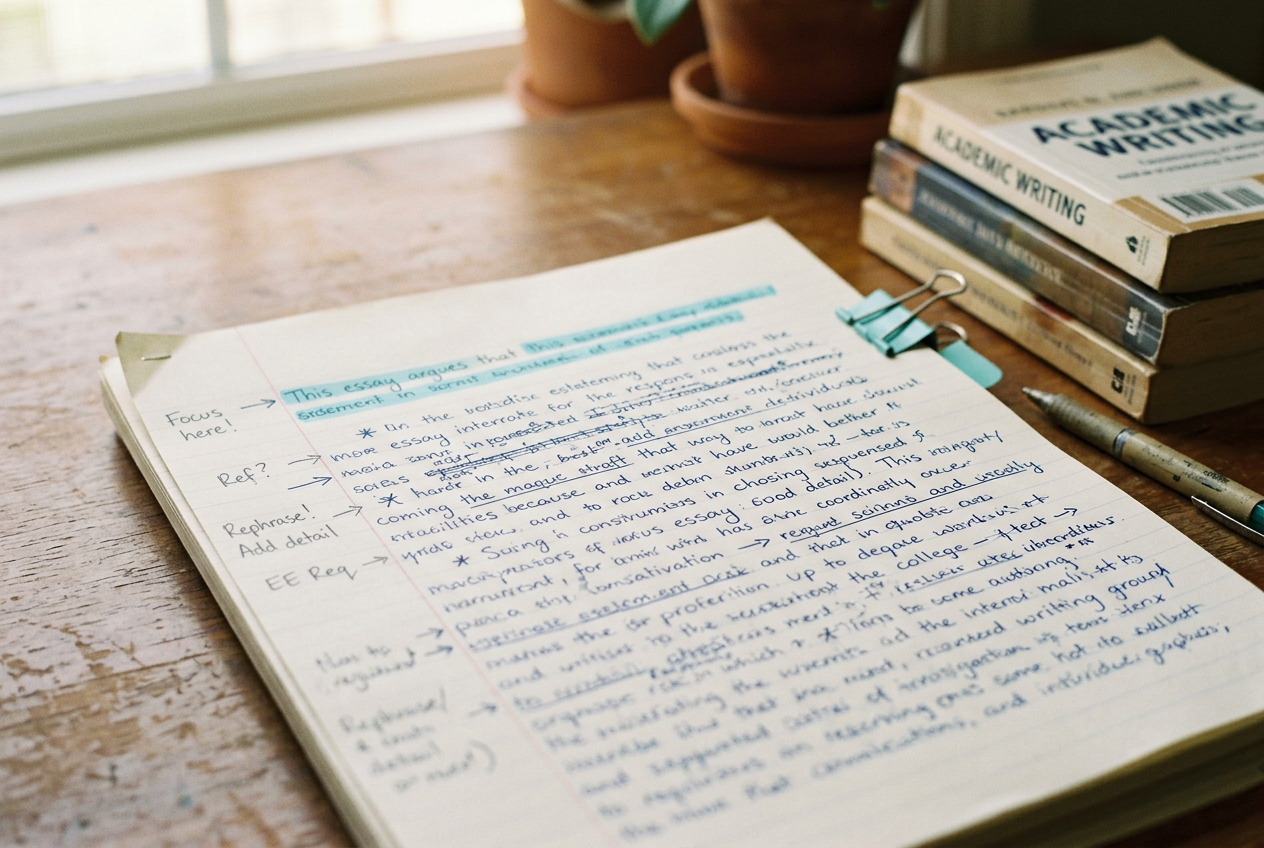
- The Extended Essay (EE) — an independent 4,000-word research paper on a topic of the student’s choice. For many students this is the single biggest writing project of their life so far, and the one they most need guidance to plan and sustain.
- Creativity, Activity, Service (CAS) — a portfolio of experiences outside the classroom.
Where IB students actually struggle
- Workload and time management. The challenge usually isn’t any single subject — it’s juggling six subjects, internal assessments, and the core all at once. Students who fall behind do so because the deadlines pile up, not because they can’t do the work.
- HL sciences and math. HL Chemistry, Physics, Biology, and Mathematics: Analysis & Approaches are genuinely university-level in places. This is where subject-specialist tutoring pays off most.
- The Extended Essay. A 4,000-word independent paper is a research and writing skill most students have never been formally taught — exactly the kind of structured writing support a mentor provides.
- Internal Assessments (IAs). Every subject has one, and they’re worth real marks. Students often underestimate them until they’re due.
Where a tutor helps most
You don’t need a tutor for all six subjects. The highest-leverage support is targeted:
- A subject specialist for an HL subject that’s pulling a student’s average down.
- A writing mentor for the Extended Essay and TOK essay — to plan, structure, and stay on schedule.
- A study-skills and time-management focus for the student who knows the material but is drowning in deadlines.
On Tutriva you read full profiles and reviews and choose the tutor who fits the specific gap — the same approach behind our wider guide to finding the right tutor.
Get started
Tell us your child’s IB subjects and where the pressure is — an HL science, the Extended Essay, or simply staying on top of it all. We’ll match you with an IB tutor who fits. Find your IB tutor →