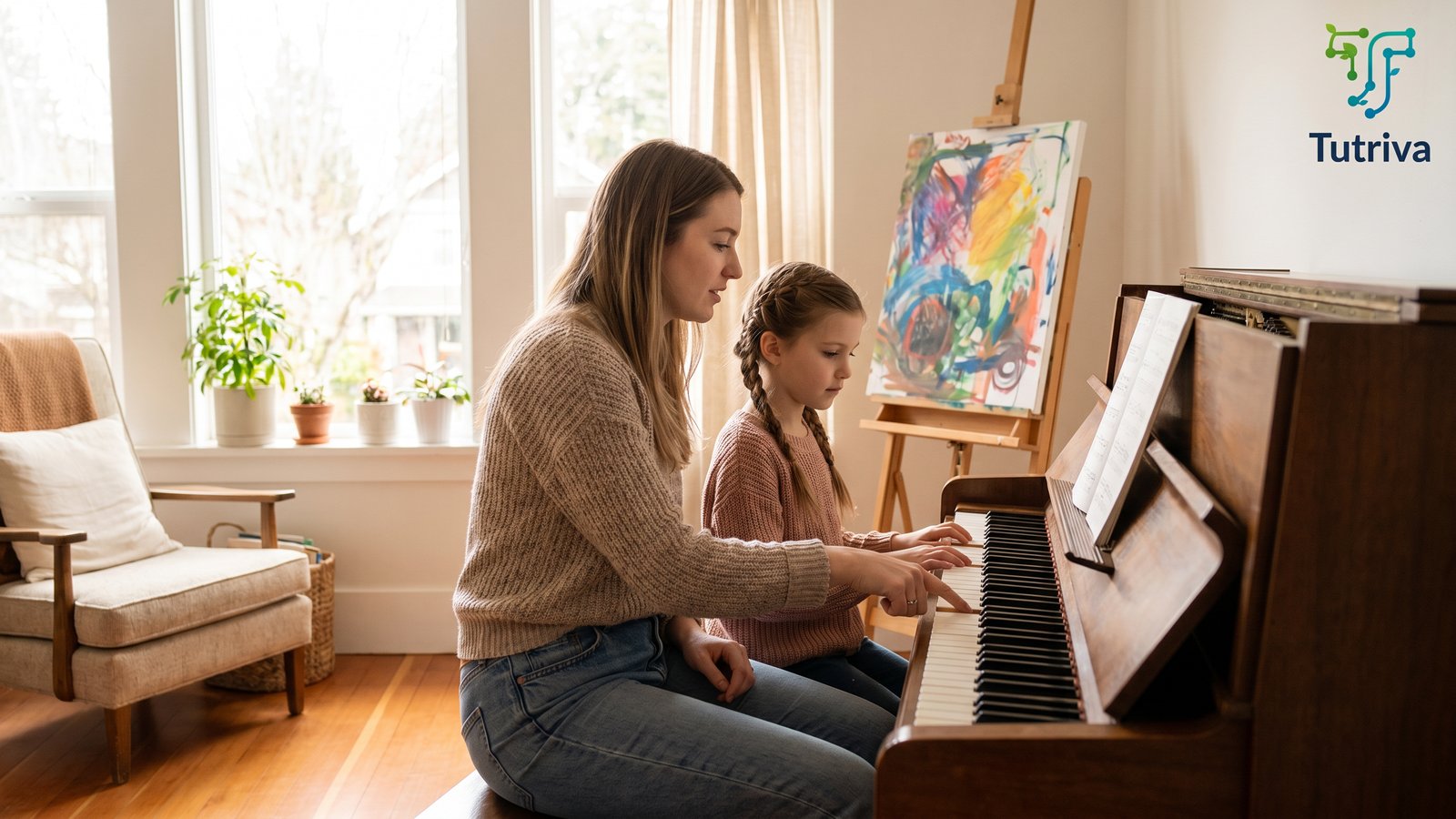
From Piano to Painting: Music and Arts Tutors on Tutriva
Music and arts tutoring sits in a different category from academic tutoring, but parents look for it in the same way: by trial and error, friend referrals, or a Google search for “piano teacher near me.”
The trial-and-error approach is especially expensive in arts tutoring because the foundation matters so much. A child who learns piano from a teacher with poor technique habits can spend years unlearning what they were taught. The same is true for posture in dance, brush technique in painting, breathing in voice.
What Tutriva covers in Music & Arts
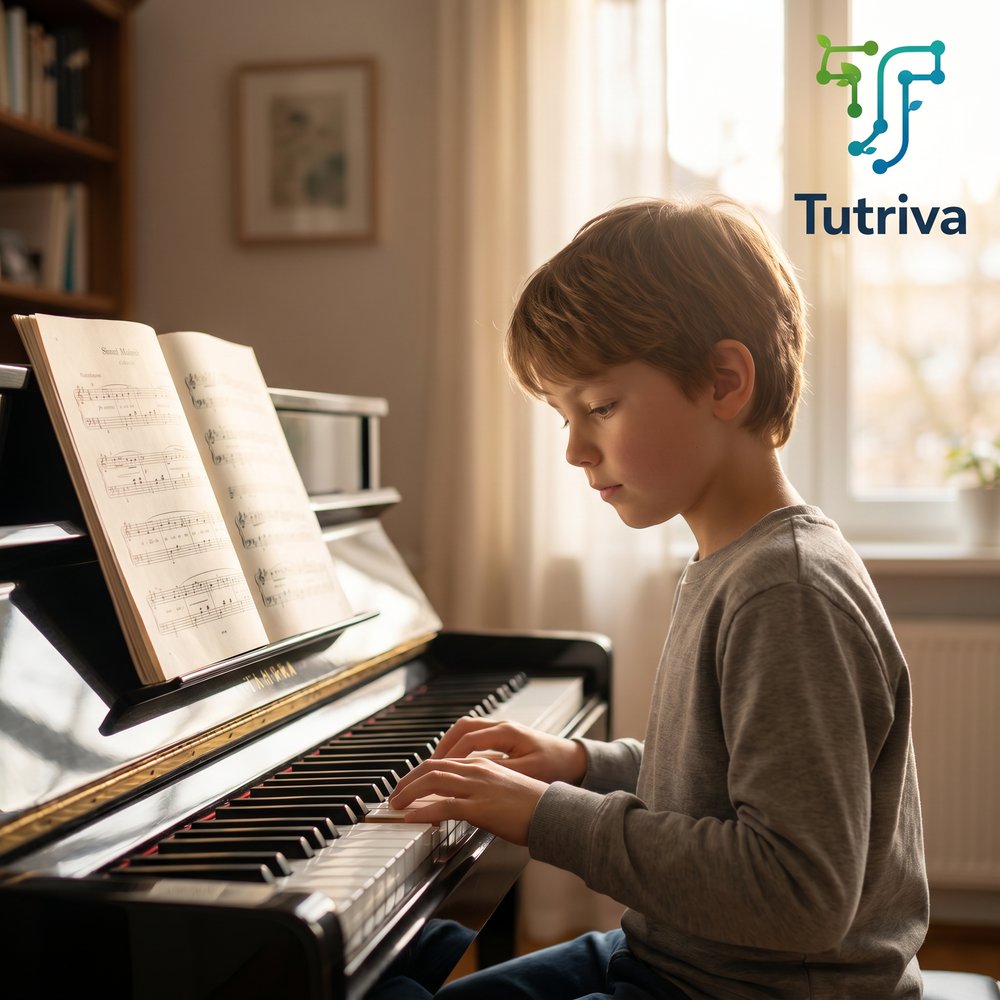
Music
- Piano — classical, jazz, contemporary
- Guitar — acoustic, electric, fingerstyle, bass
- Voice — classical, contemporary, musical theatre
- Strings — violin, viola, cello, harp
- Wind — flute, clarinet, saxophone, trumpet
- Drums and percussion
- Music theory and ear training (RCM exam prep included)
Visual Arts
- Drawing — pencil, charcoal, pen
- Painting — watercolor, acrylic, oil
- Digital illustration — Procreate, Photoshop
- Portfolio prep for high school programs and post-secondary applications
Movement and Performance Arts
- Ballet, contemporary dance, hip-hop
- Acting and theatre arts
- Public speaking and debate
What makes a good arts tutor different from a good academic tutor
In academic tutoring, the curriculum is largely fixed — a Grade 10 student preparing for the BC Numeracy Assessment is preparing for a known target. In arts, the “curriculum” is partially the student’s own taste and goals.
Three things matter:
1. Foundation depth. Can the tutor articulate why a technique is correct, not just demonstrate it?
2. Genre flexibility. A piano teacher who only teaches classical may not be ideal for a 14-year-old who wants to learn jazz improvisation.
3. Performance experience. A teacher who has performed (or exhibited, or presented) regularly tends to convey something different from one who only teaches.
How parents typically use Tutriva for arts
The most common request pattern: “Piano teacher for my 8-year-old, RCM Grade 2 prep, in-person preferred, evenings, $50–70/hour.”
Within 24 hours, parents typically receive 4–7 offers. Tutors include:
- Local conservatory students (lower rate, energetic, available evenings)
- Established private studio teachers (higher rate, structured method, often have wait lists elsewhere)
- Performing artists who tutor on the side (varied rates, strong on interpretation)
- Recently arrived teachers from China, Korea, Eastern Europe with strong classical background
For visual arts, a similar mix:
- Emily Carr graduates (strong on critique and contemporary practice)
- Studio artists who run private classes
- Animation and digital illustration specialists for portfolio prep
Tutriva’s commission model and arts tutoring
Arts tutors often work hybrid careers — performing, teaching, freelancing. The 0% per-session commission means the hourly rate they quote is what they take home. For a teacher charging $80/hour for advanced piano with a wait list of students, the difference between 0% and 30% is $24/hour — significant when the teacher’s overall hours are constrained by performing commitments.
For parents, the implication is that the most experienced arts teachers — the ones who have alternatives to platform-based work — are more likely to be on a flat-fee marketplace than a high-commission one.
Bottom line
Arts tutoring is one of the harder subjects to vet at a distance because what counts as “good” is genre-specific and student-specific. A reverse-search marketplace with full pricing transparency lets parents compare not just on rate, but on the tutor’s specific background, training lineage, and performance experience.
Find a music or arts tutor:
- Browse: tutriva.com/find-tutors/
- Post a specific request: tutriva.com/signup/
- Become a music or arts tutor: tutriva.com/signup/?userType=tutor